

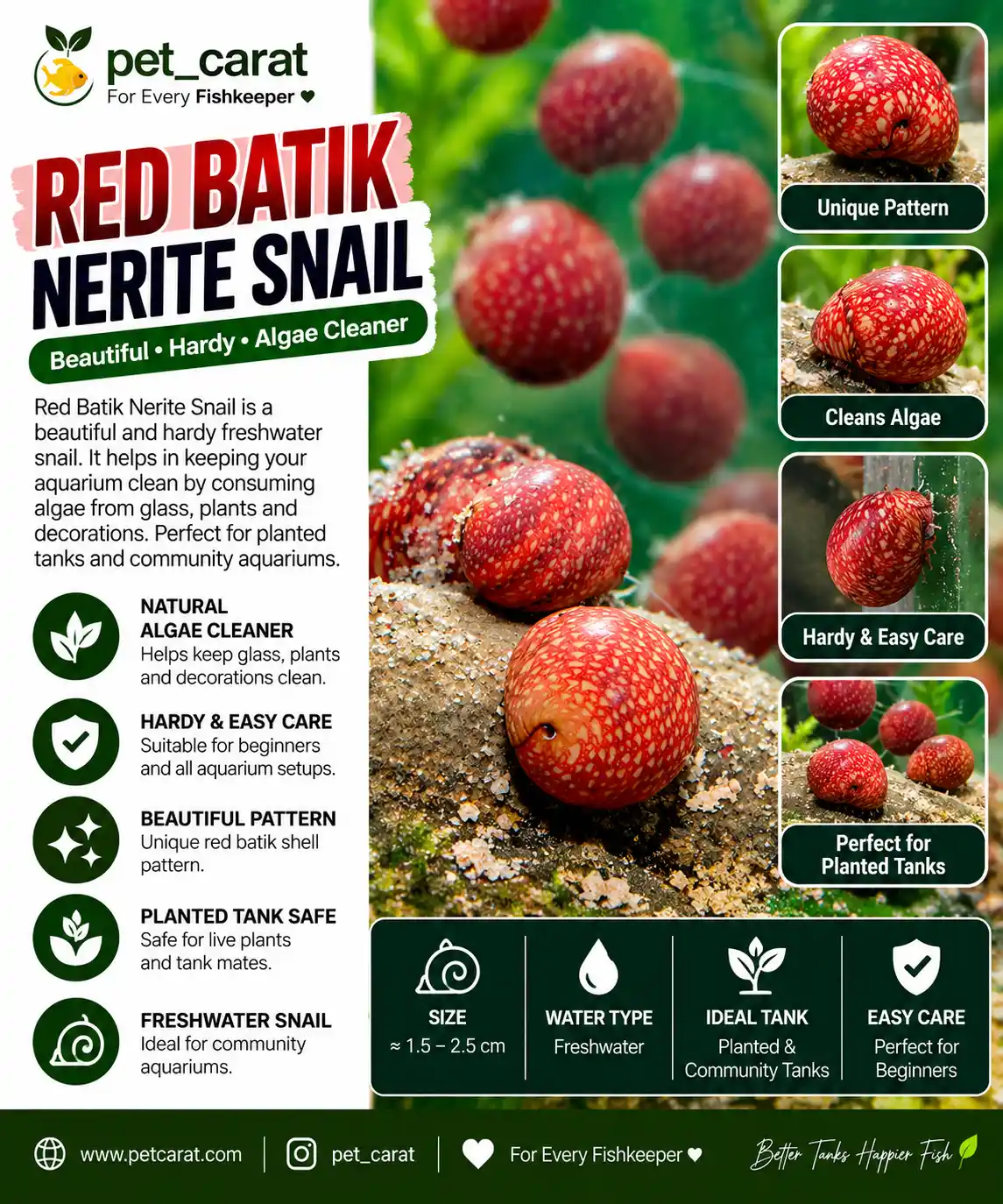
Red Batik Nerite Snail is an attractive freshwater aquarium snail known for its distinctive reddish shell with decorative patterns. It grazes on algae growing on aquarium glass, rocks, and decorations, making it a useful addition to planted aquariums.
In Stock: Yes
Quantity in Stock: Few left
Red Batik Nerite Snail is an attractive freshwater aquarium snail known for its distinctive reddish shell with decorative patterns. It grazes on algae growing on aquarium glass, rocks, and decorations, making it a useful addition to planted aquariums.
Reddish shell with contrasting decorative markings and a rounded, compact shape.
1–2 years
Algae and biofilm
Red Batik Nerite Snail is a beautiful and useful choice for algae control in peaceful freshwater aquariums. Ensure adequate natural algae or suitable supplemental food is available.
Easy to moderate
5 gallons
7.0–8.2
Moderately hard to hard
22–28°C
Approximately 2–3 cm
Peaceful community fish, dwarf shrimp, and other compatible snails.
Pufferfish, loaches, crayfish, and other animals that prey on snails.
Neritina sp.
Neritidae
Species-dependent; nerite snails occur in tropical coastal and freshwater habitats
Peaceful and generally compatible with other non-predatory aquarium inhabitants.
Primarily feeds on algae and biofilm. Supplement with suitable algae wafers if natural food is insufficient.
Egg-layer; freshwater reproduction generally does not produce viable offspring
Nerite snails may lay small white eggs on hard surfaces, but their larvae generally require brackish or marine conditions to develop successfully.
Maintain clean, stable water with adequate minerals for shell health. Avoid copper-based medications.
Shell erosion from inadequate minerals, starvation in very clean aquariums, and stress from poor water quality.
Peaceful
Peaceful, slow-moving grazer that explores glass, rocks, and aquarium decorations.
Red Batik Nerite Snails are valued for their decorative shell patterns and algae-grazing behavior. They spend much of their time moving across aquarium surfaces in search of algae and biofilm. They generally do not damage healthy aquatic plants and are suitable for many peaceful freshwater aquariums. Their exact species identification may vary by trade name.