
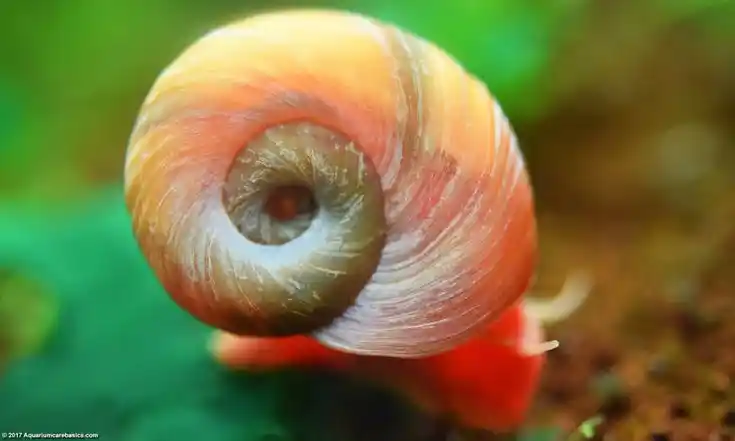
Ramshorn Snails are popular freshwater aquarium snails recognized by their distinctive spiral-shaped shells. They help clean aquariums by grazing on algae, biofilm, and leftover food.
Out of Stock
Ramshorn Snails are popular freshwater aquarium snails recognized by their distinctive spiral-shaped shells. They help clean aquariums by grazing on algae, biofilm, and leftover food.
Rounded, flat spiral-shaped shell with colors that may include red, pink, brown, and blue depending on the variety.
1–2 years
Omnivore; algae, biofilm, decaying plant matter, and leftover fish food
Ramshorn Snails are useful and attractive aquarium cleaners for planted tanks. Monitor feeding and population growth to keep their numbers manageable.
Easy
Suitable for small aquariums; no strict minimum when water quality is maintained
7.0–8.0
Moderate to hard
18–28°C
1–2.5 cm, depending on species
Guppies, tetras, danios, shrimp, and other peaceful community aquarium inhabitants.
Assassin snails, loaches, pufferfish, crayfish, and other snail-eating animals.
Planorbidae family
Planorbidae
Various freshwater habitats worldwide
Peaceful; can be kept with compatible freshwater snails and peaceful fish.
Feed algae, biofilm, leftover fish food, algae wafers, and occasional blanched vegetables. Avoid overfeeding to limit population growth.
Hermaphroditic egg-layer
Ramshorn Snails are hermaphrodites and lay gelatinous egg clusters on glass, plants, and other surfaces. Eggs hatch under suitable conditions, and populations can grow rapidly when food is plentiful.
Maintain stable, clean freshwater with sufficient minerals and calcium for healthy shell growth. Avoid copper-based medications.
Shell erosion due to low calcium availability, poor water quality, and physical shell damage.
Peaceful
Peaceful and slow-moving. They graze on aquarium surfaces, decorations, and plant debris.
Ramshorn Snails are peaceful freshwater snails valued for their distinctive coiled shells and algae-grazing behavior. They are suitable for many planted aquariums and feed on algae, biofilm, and leftover food. They can reproduce readily when food is abundant, so their population may increase quickly in well-fed aquariums.