
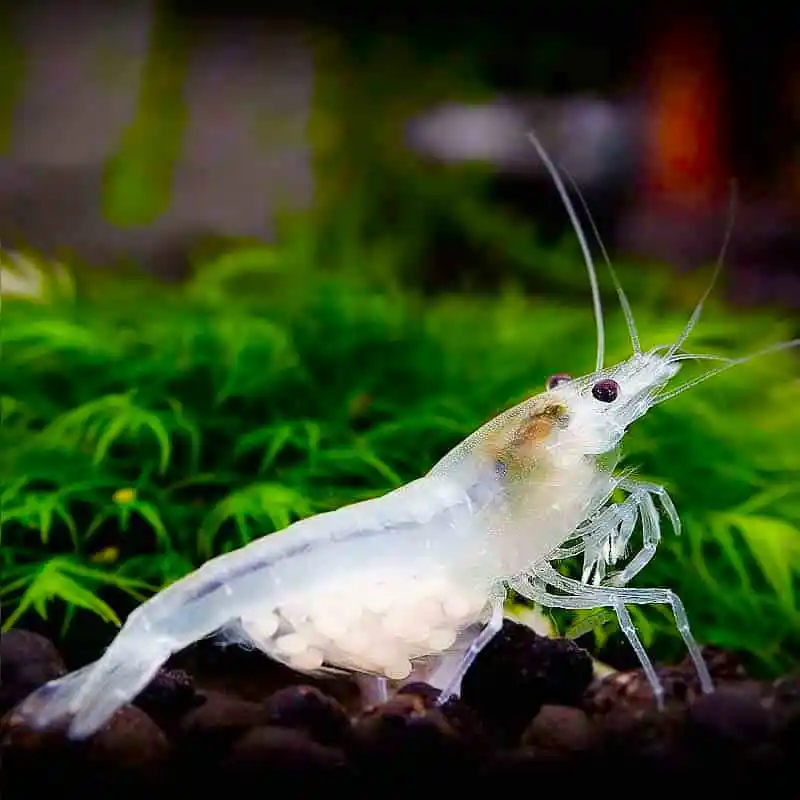
Snowball Shrimp are attractive freshwater dwarf shrimp known for their opaque white coloration. They are peaceful, active algae grazers and are well suited for planted and shrimp aquariums.
Out of Stock
Snowball Shrimp are attractive freshwater dwarf shrimp known for their opaque white coloration. They are peaceful, active algae grazers and are well suited for planted and shrimp aquariums.
Small freshwater shrimp with an opaque white to creamy-white body. Females are generally larger and may have a more rounded abdomen.
1–2 years
Omnivore
Snowball Shrimp are a beautiful and peaceful choice for planted and shrimp-only aquariums, especially for aquarists looking for a clean white shrimp variety.
Easy
5 gallons
6.5–8.0
Soft to moderately hard
20–28°C
2–2.5 cm
Other Neocaridina shrimp, compatible dwarf shrimp, snails, and very small peaceful fish that do not prey on shrimp.
Large predatory fish, aggressive fish, and species that actively hunt small shrimp or shrimp fry.
Neocaridina davidi
Atyidae
Selective freshwater aquarium strain
Highly peaceful and social; best kept in groups.
Feed high-quality shrimp pellets, algae wafers, and blanched vegetables in small quantities. They also graze naturally on biofilm and algae in a mature aquarium.
Egg-carrying freshwater breeder
Snowball Shrimp breed readily in mature freshwater aquariums. Females carry fertilized eggs beneath their abdomen for approximately 3–4 weeks before releasing fully formed miniature shrimp.
Stable, clean, well-oxygenated freshwater with adequate minerals for successful molting.
Molting problems, bacterial infections, stress from unstable water parameters, and sudden deaths caused by rapid changes in water chemistry.
Peaceful
Very peaceful, active grazers that spend much of their time searching surfaces for algae and biofilm. They are best kept in groups.
Snowball Shrimp are a selectively bred white color variety of Neocaridina davidi. They are hardy compared with many other freshwater shrimp and can thrive in mature aquariums with stable water parameters, biofilm, algae, and supplemental shrimp foods.