
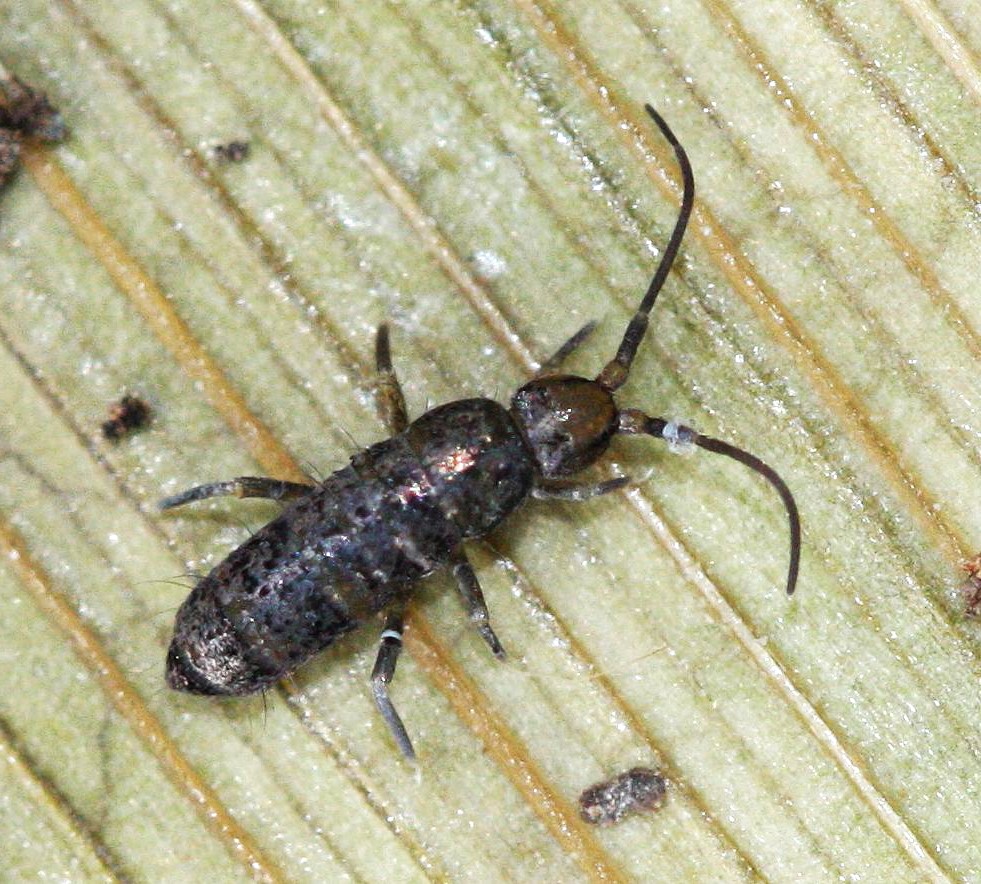
Tomocerus minor is one of the largest springtail species, often visible in terrariums. They are efficient mold and fungus eaters, helping maintain bioactive balance.
Out of Stock
Tomocerus minor is one of the largest springtail species, often visible in terrariums. They are efficient mold and fungus eaters, helping maintain bioactive balance.
Larger, elongated springtail with visible antennae, 3–4 mm long.
1–2 years
Mold, fungi, algae, and decaying plant matter.
A larger springtail species that doubles as both cleanup crew and feeder.
Easy to Intermediate – requires consistent humidity.
Small container for culture
Neutral substrate preferred
Not applicable (soil-dwelling microfauna).
70–78°F (21–25°C)
Up to 4 mm
Compatible with isopods, amphibians, and reptiles.
None – harmless cleanup crew.
Tomocerus minor
Entomobryidae
Global distribution
Colony-forming; thrive in groups.
Yeast, rice, mold, fungi, and algae.
Breeds steadily in high-humidity conditions.
Reproduces steadily but at a slower pace compared to White Springtails.
Humidity: 70–90%, Temperature: 70–78°F (21–25°C).
Humidity fluctuations can reduce colony survival.
Peaceful and beneficial microfauna.
Peaceful scavenger; jumps when disturbed.
Tomocerus minor is notable for being a larger springtail species, growing up to 3–4 mm in length. Its larger size makes it more visible compared to other springtail species. They are excellent mold controllers and suitable for use in bioactive enclosures. While slower to reproduce than Folsomia candida, their size makes them a useful live food source for microfauna-eating animals.