
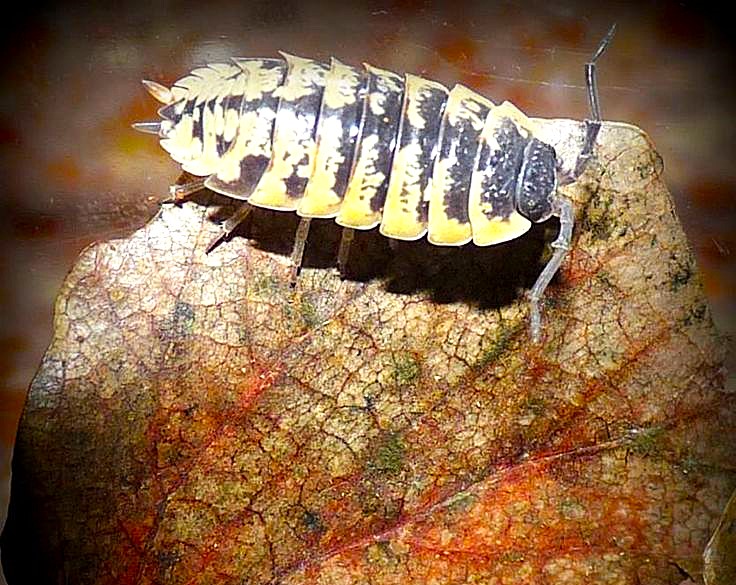
Porcellio ornatus, known as the Ornate Isopod, is one of the most colorful and visually striking isopods in the hobby. With bold yellow and black striping, it adds a decorative element to bioactive setups while also serving as a detritivore.
Out of Stock
Porcellio ornatus, known as the Ornate Isopod, is one of the most colorful and visually striking isopods in the hobby. With bold yellow and black striping, it adds a decorative element to bioactive setups while also serving as a detritivore.
Distinct yellow and black banded or spotted pattern; larger body size and rough exoskeleton texture. Adults grow up to 20 mm in length.
2–3 years (in captivity with proper care)
Detritivore; feeds on leaf litter, rotting wood, vegetables, and supplemental protein and calcium.
Porcellio ornatus is prized for its vivid coloration and bold behavior, making it a standout species for display colonies.
Intermediate – requires more ventilation and balanced microclimate.
5 gallons for a colony
Neutral substrate preferred
Not applicable (terrestrial species; calcium supplementation required).
70–80°F (21–27°C)
Up to 20 mm (0.8 inches)
Compatible with springtails and other non-aggressive isopods in bioactive setups.
Predatory species, low-humidity setups, and aggressive tank mates.
Porcellio ornatus
Porcellionidae
Southern Europe
Highly social, does best in groups with hiding areas.
Provide leaf litter, rotting wood, cuttlebone, vegetables, and occasional protein supplements.
Females carry eggs in a marsupium. Breeding occurs steadily in moist environments with adequate food.
Provide mixed moist and dry zones, good ventilation, and calcium. Breeds steadily but not as fast as laevis.
Humidity: 60–75%, Temperature: 70–80°F (21–27°C), with areas of higher ventilation.
Poor ventilation may lead to die-offs; lack of calcium affects molting; sensitive to overly wet environments.
Active and social; often visible in enclosures but enjoys hiding under bark and rocks.
Active and bold, often climbing decor and visible during the day compared to shyer isopods.
Porcellio ornatus is native to southern Europe. It is popular among keepers due to its attractive coloration and large size. These isopods require higher ventilation than many other species, preferring a setup that balances humid hides with drier areas. They breed readily but at a slightly slower pace than Porcellio laevis. Their striking appearance has made them a premium choice for isopod collections.