

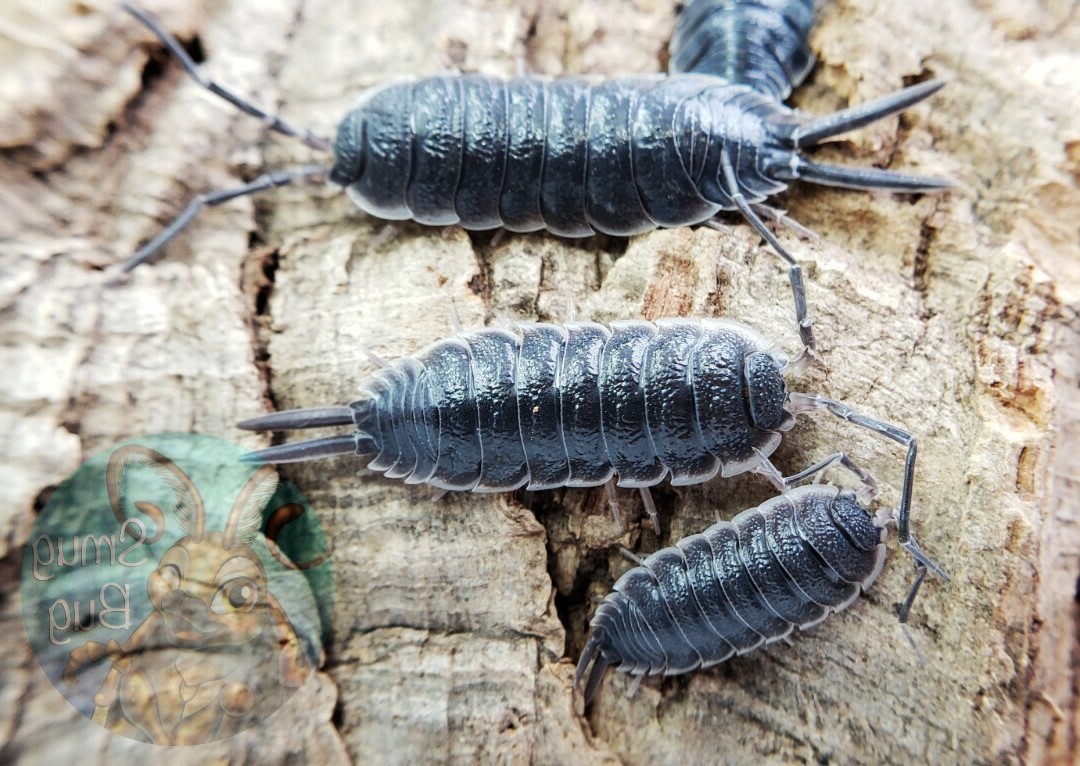
Porcellio hoffmannseggi is one of the largest terrestrial isopods in the world, native to the Iberian Peninsula. Known for its impressive size and armored appearance, it is a prized species among advanced isopod keepers.
Out of Stock
Porcellio hoffmannseggi is one of the largest terrestrial isopods in the world, native to the Iberian Peninsula. Known for its impressive size and armored appearance, it is a prized species among advanced isopod keepers.
Large, armored body with a rough-textured exoskeleton; gray to brown coloration. Adults may reach up to 28 mm (over 1 inch).
3–4 years (in captivity with proper care)
Detritivore; consumes leaf litter, decaying wood, vegetables, and supplemental calcium sources.
Porcellio hoffmannseggi is a showcase isopod, admired for its massive size and rarity. A true collector’s species for serious hobbyists.
Advanced – slow growth and higher ventilation needs.
10 gallons (to establish a colony)
Neutral substrate preferred
Not applicable (terrestrial species; calcium supplementation required).
68–77°F (20–25°C)
Up to 28 mm (1.1 inches)
Best in species-only enclosures or with springtails in bioactive setups.
Predatory species or aggressive tank mates; unsuitable for overly damp setups.
Porcellio hoffmannseggi
Porcellionidae
Iberian Peninsula (Spain and Portugal)
Colony-dwelling; thrives in groups but remains shy and hidden.
Offer decaying leaves, rotting wood, vegetables, and protein sources. Provide constant access to calcium.
Slow breeder; females carry eggs in a marsupium until hatching. Colonies expand gradually.
Slow to reproduce; requires stable conditions with high ventilation and calcium supplementation.
Humidity: 60–75%, Temperature: 68–77°F (20–25°C), with strong ventilation.
Sensitive to poor ventilation and excessive humidity; prone to molting issues if calcium is insufficient.
Shy and reclusive, often hiding under substrate or decor during the day.
Secretive, nocturnal scavengers. Less surface-active than other Porcellio species.
Porcellio hoffmannseggi originates from Spain and Portugal and is one of the largest known isopod species, with adults exceeding 2.5 cm. They require well-ventilated enclosures with areas of both moisture and dryness. Colonies grow slowly, but they are extremely rewarding for display purposes due to their size and rarity. Their care demands patience, making them better suited for advanced keepers.