
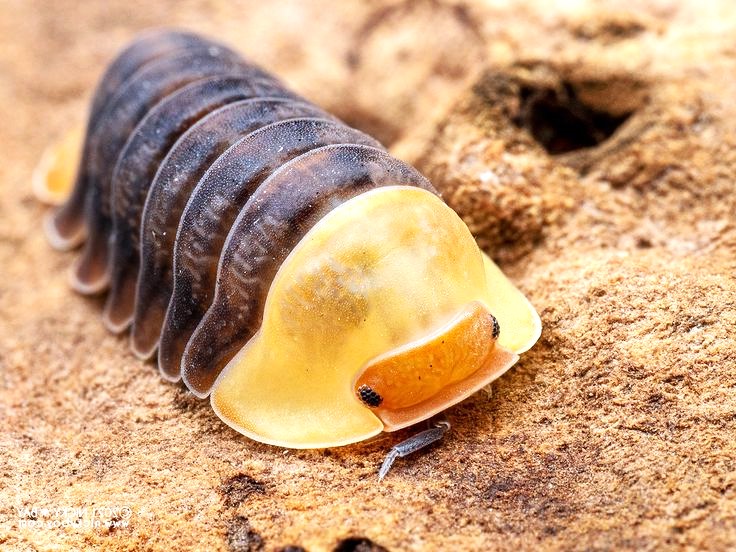
The Rubber Ducky Isopod (Cubaris sp. 'Rubber Ducky') is a highly sought-after isopod species named for its distinctive yellow face that resembles a rubber duck. It is a more delicate species requiring stable conditions and careful care.
Out of Stock
The Rubber Ducky Isopod (Cubaris sp. 'Rubber Ducky') is a highly sought-after isopod species named for its distinctive yellow face that resembles a rubber duck. It is a more delicate species requiring stable conditions and careful care.
Dark body with a distinctive yellow 'duck face' marking. Adults reach about 18–20 mm in size.
2–3 years
Leaf litter, rotting wood, vegetables, and calcium supplementation.
Rubber Ducky Isopods are prized for their unique look but require more effort to maintain healthy colonies.
Intermediate to Advanced – requires careful monitoring of humidity and environment.
2–5 gallons
Slightly acidic to neutral substrate preferred
Not applicable (terrestrial; calcium supplementation required).
72–78°F (22–26°C)
Up to 20 mm
Best kept in species-only colonies.
Predators or species requiring drier environments; should not be mixed with more aggressive isopods.
Cubaris sp. 'Rubber Ducky'
Armadillidae
Thailand (cave habitats)
Colony-living, thrives in groups but slower reproducer.
Provide constant access to leaf litter, vegetables, rotting wood, and cuttlebone for calcium.
Slow breeder compared to other isopods; females carry eggs in a marsupium.
Breeds slowly; requires high humidity, stable temperatures, and calcium sources.
Humidity: 70–90%, Temperature: 72–78°F (22–26°C), low ventilation to retain moisture.
Highly sensitive to dryness and environmental instability; needs calcium supplementation.
Shy and secretive; tends to hide under wood or leaf litter.
Reclusive; spends much of its time hidden in moist areas.
Cubaris sp. 'Rubber Ducky' originates from caves in Thailand. Known for its adorable duck-like facial marking, this species has become one of the most popular isopods in the hobby. However, it is more sensitive to environmental fluctuations and requires a consistently moist environment with plenty of hides.