
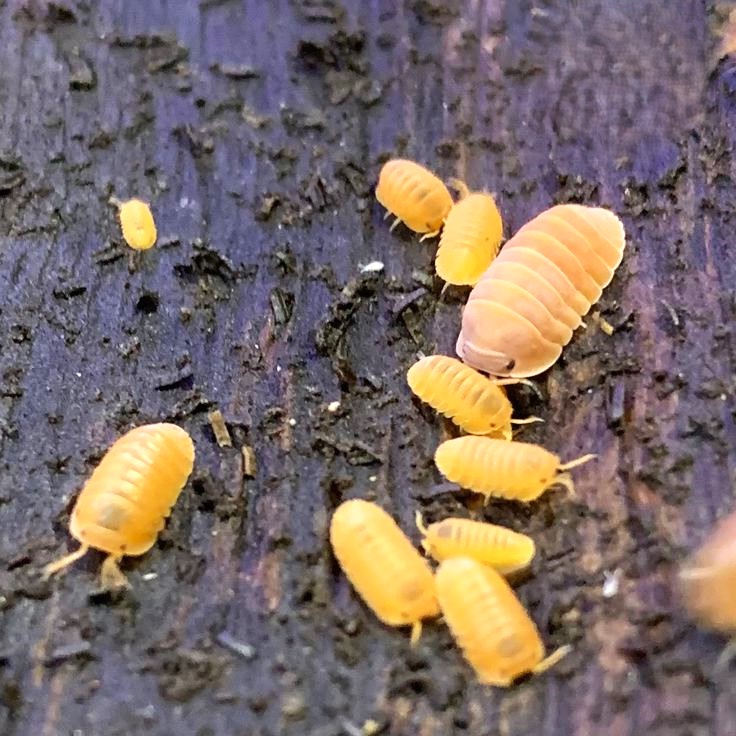
The Papaya Isopod is a selectively bred Cubaris morph known for its soft orange-to-pink coloration, resembling the fruit it is named after. Popular among enthusiasts for its rarity and beauty.
Out of Stock
The Papaya Isopod is a selectively bred Cubaris morph known for its soft orange-to-pink coloration, resembling the fruit it is named after. Popular among enthusiasts for its rarity and beauty.
Smooth body with light pink-to-orange coloration, often translucent. Adults reach about 18–20 mm.
2–3 years
Leaf litter, decaying wood, fruits, vegetables, and calcium.
Papaya Isopods are one of the most beautiful Cubaris morphs, perfect for dedicated collectors willing to provide ideal conditions.
Intermediate to Advanced – requires careful monitoring of humidity and diet.
2–5 gallons
Neutral to slightly acidic substrate preferred
Not applicable (terrestrial; requires calcium supplementation).
72–80°F (22–27°C)
Up to 20 mm
Best kept in species-only colonies.
Predators, aggressive isopods, or species that thrive in drier environments.
Cubaris sp. 'Papaya'
Armadillidae
Captive-bred morph (originally from Southeast Asian Cubaris species)
Colony-living, thrives in groups.
Offer leaf litter, fruits (like papaya, pumpkin), vegetables, and calcium supplements.
Slow to moderate breeder; requires high humidity and warmth.
Slow but steady under stable humidity, calcium, and leaf litter availability.
Humidity: 70–90%, Temperature: 72–80°F (22–27°C), moderate ventilation.
Sensitive to drying out and environmental fluctuations; prone to molting problems without calcium.
Shy and delicate; prefers hiding places and stable environments.
Shy and often hides; less active on the surface compared to hardy species.
Cubaris sp. 'Papaya' is a cultivated morph of Cubaris with pastel orange-pink coloration. It requires high humidity and stable, warm conditions to thrive and reproduce. It is more sensitive than common isopods, making it better suited for intermediate to advanced keepers.