
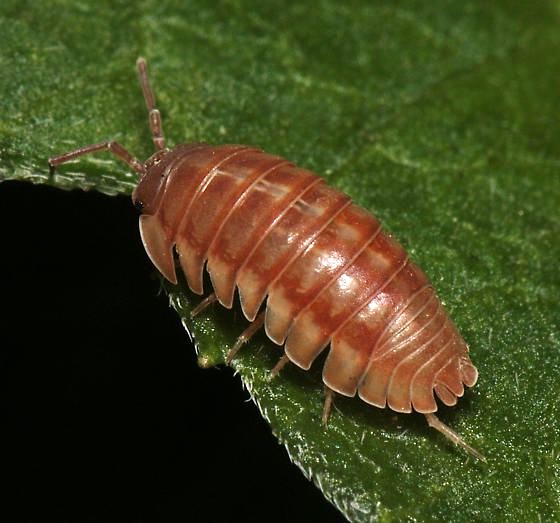
Armadillidium nasatum, commonly called the Nosy Pill Bug, is a hardy isopod species recognizable by its distinctive protruding 'nose'-like structure at the head. It is valued in bioactive setups for its adaptability and ease of care.
Out of Stock
Armadillidium nasatum, commonly called the Nosy Pill Bug, is a hardy isopod species recognizable by its distinctive protruding 'nose'-like structure at the head. It is valued in bioactive setups for its adaptability and ease of care.
Similar in shape to A. vulgare but with a distinctive forward-projecting 'nose'. Color ranges from gray to brown, sometimes with patterning. Adults grow up to 18 mm.
2–3 years (in captivity with proper care)
Detritivore; consumes decaying organic matter, vegetables, and requires calcium supplementation.
Armadillidium nasatum is a beginner-friendly isopod species with unique facial features. Great for bioactive setups and colony observation.
Easy – hardy and adaptable to various conditions.
2–5 gallons
Neutral substrate preferred
Not applicable (terrestrial species; calcium supplementation required).
65–77°F (18–25°C)
Up to 18 mm (0.7 inches)
Compatible with springtails and other peaceful isopods in mixed colonies.
Predatory tank mates or environments with excessive humidity and poor ventilation.
Armadillidium nasatum
Armadillidiidae
Europe (widespread, introduced elsewhere)
Colony-dwelling; thrives in groups.
Offer leaf litter, rotting wood, vegetables, and calcium-rich sources like cuttlebone.
Breeds readily in captivity; females carry eggs in a marsupium until hatching.
Readily breeds in captivity with proper humidity, ventilation, and food supply.
Humidity: 50–70%, Temperature: 65–77°F (18–25°C), with good ventilation.
Overly wet environments can cause population stress; needs calcium for healthy molting.
Peaceful and adaptable; rolls into a ball when threatened, similar to A. vulgare.
Active scavenger, rolls into a ball when disturbed but less tightly than A. vulgare.
Armadillidium nasatum originates from Europe and is now found in many parts of the world. It closely resembles A. vulgare but can be distinguished by its characteristic 'nose'-like projection at the front of the head. This species is hardy, adaptable, and thrives in bioactive terrariums. Colonies reproduce well when provided with food, moisture, and hides.