
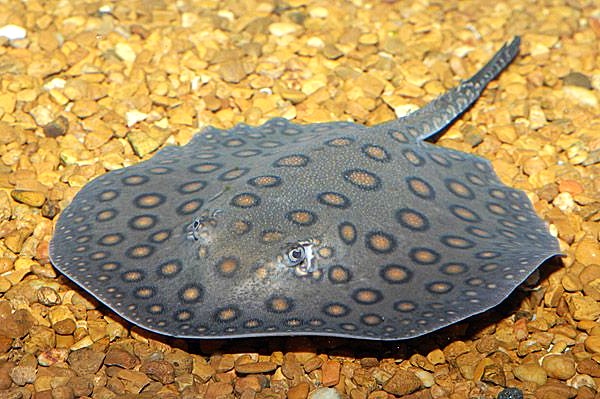
The Motoro Stingray is one of the most popular freshwater stingrays, admired for its unique spotted pattern and graceful swimming style.
Out of Stock
The Motoro Stingray is one of the most popular freshwater stingrays, admired for its unique spotted pattern and graceful swimming style.
Rounded, disc-shaped body with a long whip-like tail. The body is brownish with bright orange to yellow spots, giving a striking appearance.
10–15 years (in captivity with proper care)
Carnivorous; feeds on worms, shrimp, small fish, mussels, and high-protein sinking pellets.
The Motoro Stingray is a fascinating freshwater giant, perfect for experienced aquarists with the right tank space and dedication. Its beauty and unique behavior make it a prized species in the aquarium hobby.
Expert
250 gallons or larger with ample floor space
6.5–7.5
2–12 dGH
78–84°F (25–29°C)
18–24 inches (disc diameter)
Large peaceful fish such as silver arowanas, large catfish, peacock bass, and bichirs.
Aggressive cichlids, fin-nipping species, and any fish small enough to be eaten.
Potamotrygon motoro
Potamotrygonidae
South America (Amazon and Orinoco River basins)
Generally solitary but can be housed with other large, peaceful fish if space permits.
Feed daily with a varied diet of meaty foods like shrimp, worms, mussels, fish fillets, and sinking carnivore pellets.
Ovoviviparous; females give birth to live young after internal fertilization.
Internal fertilization; females can produce multiple pups per brood after a gestation of around 3 months.
pH: 6.5–7.5, Temperature: 78–84°F, Hardness: 2–12 dGH
Sensitive to water conditions; prone to bacterial infections, parasites, and injuries if kept on rough substrates.
Generally peaceful, but predatory towards small tank mates.
Active bottom-dweller, peaceful towards larger tank mates but predatory towards small fish.
Motoro Stingrays are native to South America and are among the most recognizable freshwater stingrays due to their brown bodies covered in bright orange or yellow spots. They require a large aquarium with a sandy substrate, strong filtration, and pristine water conditions. These stingrays are sensitive to poor water quality and copper-based medications. They are powerful feeders and fascinating to observe in large custom aquariums.