

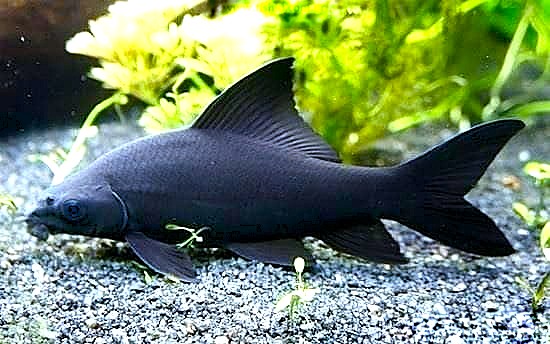
The Black Shark (Labeo chrysophekadion), also known as the Black Labeo or Black Algae Eater, is a large, peaceful yet active freshwater fish. It is prized for its sleek, dark body and strong swimming abilities, making it an engaging addition to large community aquariums.
Out of Stock
The Black Shark (Labeo chrysophekadion), also known as the Black Labeo or Black Algae Eater, is a large, peaceful yet active freshwater fish. It is prized for its sleek, dark body and strong swimming abilities, making it an engaging addition to large community aquariums.
Sleek, elongated black body with slightly compressed sides. Fins are dark, and the tail is forked. Adults can reach up to 16 inches. Strong, agile swimmer with a torpedo-shaped body adapted for open water.
8–12 years with proper care
Omnivorous; feeds on high-quality flakes, pellets, and sinking foods. Supplement with live or frozen foods such as bloodworms, brine shrimp, and daphnia. Vegetables like blanched zucchini, cucumber, and spinach are appreciated.
Black Sharks are ideal for experienced aquarists with large tanks. Their striking black coloration, algae-eating habits, and active swimming make them valuable additions to spacious community setups.
Moderate to advanced – requires very large tank, stable water parameters, and space for swimming.
150+ gallons
6.5 to 7.5
5–15 dGH
74–82°F (23–28°C)
16 inches
Peaceful medium to large fish such as gouramis, barbs, rainbowfish, and large tetras. Avoid very small or aggressive species.
Very small fish that may be harassed. Aggressive species that may compete for territory. Avoid delicate or slow-moving fish in small tanks.
Labeo chrysophekadion
Cyprinidae
Southeast Asia – Thailand, Malaysia, Indonesia; rivers and large streams with open swimming areas.
Mostly peaceful; can be territorial in confined spaces. Best kept with medium to large peaceful community fish.
Feed 2–3 times daily with flakes, pellets, and sinking foods. Supplement occasionally with live or frozen foods and blanched vegetables for optimal health and coloration.
Breeding in captivity is rare and challenging. Eggs are scattered over substrate with no parental care. Most Black Sharks in the aquarium trade are wild-caught or selectively captive-bred.
pH: 6.5–7.5, Temperature: 74–82°F (23–28°C), Hardness: 5–15 dGH, Ammonia/Nitrite: 0 ppm, Nitrate: <20 ppm
Sensitive to poor water quality and overcrowding. Prone to stress, ich, and bacterial infections if conditions are not optimal. Maintain clean water and proper diet.
Generally peaceful but can be territorial in small tanks. Active and strong swimmer, prefers open swimming areas with some hiding spaces. Can be semi-aggressive towards smaller fish only if stressed or cramped.
Native to Southeast Asia, particularly Thailand, Malaysia, and Indonesia, Black Sharks inhabit rivers and large streams. Adults can reach up to 16 inches, requiring a very large tank (150+ gallons) with open swimming areas and hiding spots. They are excellent for algae control and add dynamic movement to community aquariums. Providing stable water parameters, ample space, and high-quality food ensures their health, longevity, and natural behavior.