
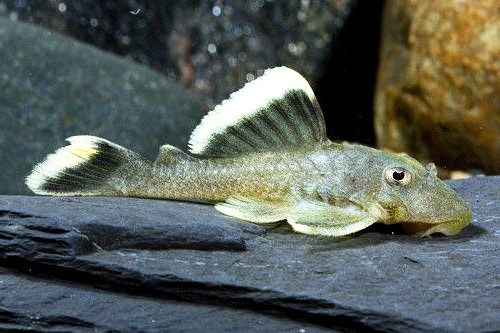
The Magnum Pleco (Baryancistrus xanthellus) is a large, visually striking freshwater catfish known for its dark body accented with bright yellow or golden spots and fins. It is peaceful, nocturnal, and thrives in well-structured aquariums with caves, driftwood, and hiding spaces.
Out of Stock
The Magnum Pleco (Baryancistrus xanthellus) is a large, visually striking freshwater catfish known for its dark body accented with bright yellow or golden spots and fins. It is peaceful, nocturnal, and thrives in well-structured aquariums with caves, driftwood, and hiding spaces.
Flattened, armored body with dark brown to black base color and bright yellow/golden spots. Broad pectoral and caudal fins with a large sucker mouth. Adults reach 8–12 inches; males often develop small odontodes on pectoral fins during breeding.
10–15 years with proper care
Omnivorous; primarily grazes on algae and biofilm. Supplement with sinking algae wafers, blanched vegetables (zucchini, cucumber, spinach), and protein-rich foods such as bloodworms, brine shrimp, and shrimp pellets.
Magnum Plecos are excellent for aquarists seeking a visually striking, peaceful, and active bottom-dwelling catfish. Their unique pattern, manageable size for large aquariums, and nocturnal behavior make them both decorative and functional.
Moderate – requires large tanks, proper diet, hiding spaces, and stable water parameters.
75+ gallons (larger recommended for multiple individuals or community setups)
6.5 to 7.5
5–15 dGH
74–82°F (23–28°C)
8–12 inches
Peaceful midwater and surface community fish such as tetras, rasboras, gouramis, and dwarf cichlids. Avoid aggressive or very small species.
Aggressive or very small fish, or other large territorial bottom-dwellers without adequate hiding spaces.
Baryancistrus xanthellus
Loricariidae
South America – Rio Xingu, Brazil; inhabits rocky and driftwood-rich rivers.
Semi-solitary; peaceful with other species. Males may guard caves during breeding.
Feed primarily on algae wafers and biofilm. Supplement with blanched vegetables such as zucchini, cucumber, and spinach. Provide occasional protein-rich foods such as bloodworms, brine shrimp, or shrimp pellets. Ensure food reaches the bottom where they graze.
Magnum Plecos are cave spawners. Males guard eggs in a secure cave while females leave. Fry become free-swimming after several days. Conditioning with protein-rich foods enhances breeding success.
pH: 6.5–7.5, Temperature: 74–82°F (23–28°C), Hardness: 5–15 dGH, Ammonia/Nitrite: 0 ppm, Nitrate: <20 ppm
Sensitive to poor water quality; prone to ich, fin rot, or bacterial infections if stressed. Stable water conditions and a balanced diet are essential.
Semi-solitary and peaceful. Nocturnal, spending most of the day hiding under rocks, driftwood, or caves. Becomes active at night while grazing and exploring. Compatible with medium to large peaceful community fish.
Native to South America, particularly the Rio Xingu in Brazil, the Magnum Pleco is admired for its striking yellow spotting pattern against a dark armored body. Adults reach 8–12 inches, requiring large aquariums. They are nocturnal and bottom-dwelling, requiring caves, driftwood, and moderate water flow. A varied diet of algae, vegetables, and protein-rich foods ensures long-term health, vibrant coloration, and active nocturnal behavior. Regular water maintenance is essential to prevent stress and disease.