
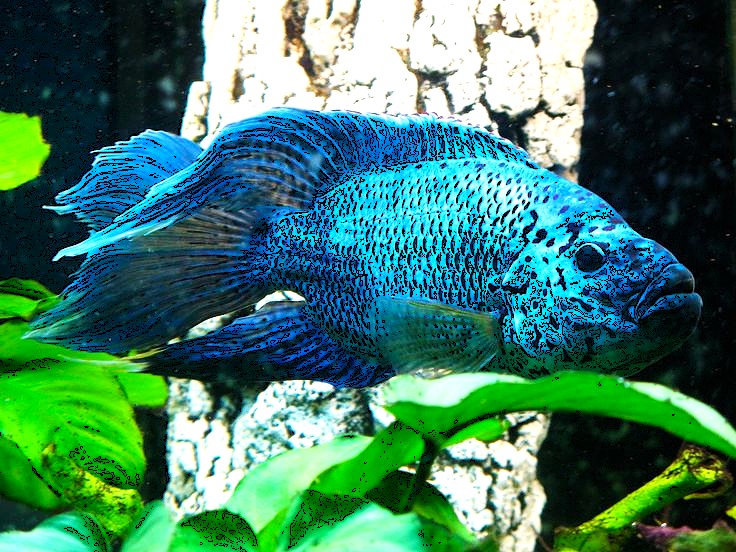
The Electric Blue Oscar is a stunning selectively bred variety of the Oscar fish, showcasing bright metallic blue coloration across its body. Known for its vivid colors, intelligence, and strong personality, this Oscar is a rare and desirable centerpiece fish for large aquariums.
Out of Stock
The Electric Blue Oscar is a stunning selectively bred variety of the Oscar fish, showcasing bright metallic blue coloration across its body. Known for its vivid colors, intelligence, and strong personality, this Oscar is a rare and desirable centerpiece fish for large aquariums.
Electric Blue Oscars display shimmering blue scales across their entire body, often with subtle marbling or darker undertones. Their metallic finish and vibrant eyes make them one of the most visually stunning Oscar varieties.
10–15 years
Omnivorous; enjoys cichlid pellets, shrimp, worms, insects, and occasional vegetable matter.
The Electric Blue Oscar is one of the most visually striking aquarium fish available. With proper care, they combine beauty, intelligence, and personality, becoming the highlight of any large aquarium. However, their care demands—space, filtration, and maintenance—should not be underestimated.
Intermediate to Advanced
75 gallons (125+ for pairs)
6.0–7.5
5–20 dGH
74–81°F (23–27°C)
12–14 inches
Large cichlids (Green Terror, Jack Dempsey, Severum), Silver Dollars, large Plecos, Bichirs.
Small community fish, shrimp, snails, or timid species easily bullied by large cichlids.
Astronotus ocellatus (Electric Blue variety)
Cichlidae
Amazon Basin (selectively bred morph)
Semi-aggressive; territorial but very interactive with humans.
Feed 1–2 times daily with cichlid pellets as the staple. Supplement with shrimp, earthworms, crickets, and frozen foods.
Egg layer; forms bonded pairs, cleans flat surfaces for egg-laying, and both parents guard the fry.
Breeding Electric Blue Oscars follows the same process as other Oscars. A bonded pair requires at least 100 gallons. The female lays hundreds of eggs on cleaned surfaces, and both parents guard them until hatching in 2–3 days. Fry can be raised on infusoria, baby brine shrimp, and crushed flakes.
pH: 6.0–7.5, Temperature: 74–81°F, Hardness: 5–20 dGH
Hole-in-the-head disease, ich, fin rot, and obesity. Prevent with varied diet, clean water, and avoiding feeder fish.
Semi-aggressive; territorial but social with humans. Can coexist with other large fish in spacious tanks.
Curious, interactive, and intelligent. They enjoy rearranging tank decorations and may display territorial aggression. Very engaging with human interaction, often begging for food and following movement outside the tank.
Electric Blue Oscars are an eye-catching variant of Astronotus ocellatus, bred for their brilliant blue hues. Unlike the darker Black or traditional Tiger Oscars, the Electric Blue variety glows under aquarium lighting with shades of turquoise, sky blue, and metallic sheen. Native Oscars originate from the Amazon Basin, but this morph is selectively bred in captivity. They are intelligent, interactive, and often compared to aquatic pets for their ability to recognize their owners. Due to their large size and heavy waste production, they require strong filtration and frequent water changes. Their bold and curious nature makes them rewarding, but their semi-aggressive temperament demands careful tank mate selection.