
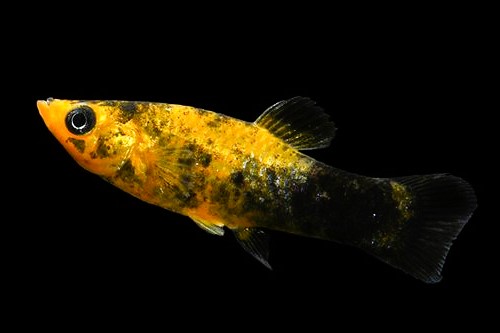
A visually striking molly variety with metallic gold-speckled scales (gold-dust effect) often contrasted on a dark or silver body. Hardy, active, and popular in community tanks.
In Stock: Yes
Quantity in Stock: Few left
A visually striking molly variety with metallic gold-speckled scales (gold-dust effect) often contrasted on a dark or silver body. Hardy, active, and popular in community tanks.
Metallic gold dust flecks over a base color that ranges from black, charcoal, or silver to golden tones. Scales have a reflective sheen under bright lighting. Males are slimmer with a pointed anal fin modified into a gonopodium; females are larger-bodied and fuller in the abdomen when gravid.
3-5 years (with good water quality and diet)
Omnivorous — mix of high-quality flakes/pellets, spirulina/vegetable matter, and occasional live or frozen protein (brine shrimp, daphnia, bloodworms).
Gold Dust Mollies combine showy metallic coloration with hardy behavior, making them an excellent choice for community tanks and beginner breeders. Keep them in stable, well-filtered water, feed a varied diet, and provide plants/cover for fry survival to get the best results.
Beginner to Intermediate
20 gallons (recommended for a small group)
7.0 to 8.5
10–30 dGH
72–82°F (22–28°C)
3 to 4 inches (females generally larger)
Guppies, Platies, Swordtails, Corydoras, Harlequin Rasboras, peaceful tetras, danios, snails, and shrimp (monitor shrimp with large adult mollies).
Large aggressive cichlids, predatory species, and habitual fin-nippers (e.g., tiger barbs).
Poecilia sphenops (Gold Dust Molly variety)
Poeciliidae
Captive-bred variety derived from Central American Poecilia species (selective breeding for metallic/gold dust patterning).
Community-oriented; prefers groups and exhibits schooling/gregarious behavior with other peaceful livebearers.
Feed 2–3 small meals per day. Base diet of high-quality flakes or pellets formulated for livebearers; supplement several times weekly with spirulina/vegetable matter and live/frozen protein (brine shrimp, daphnia). Offer blanched zucchini or spinach weekly to aid digestion and color.
Livebearer — females give birth to free-swimming fry; no parental care given.
Females carry developing fry internally for ~4–6 weeks depending on temperature and condition; a single spawn can yield ~20–80 fry (larger females yield more). Condition parents with protein-rich live/frozen foods before breeding. Provide dense plants, floating vegetation, or a breeder box to protect fry — adults may predate. Fry accept powdered flake, infusoria, microworms, or newly hatched brine shrimp and grow rapidly with frequent small feedings.
pH: 7.0–8.5, Temperature: 72–82°F (22–28°C), Hardness: 10–30 dGH, Ammonia/Nitrite: 0 ppm, Nitrate: <30 ppm
Ich, fin rot, fungal infections, and problems from poor water quality (stress, parasitic infections). Overfeeding and low-fiber diets can lead to constipation — include blanched veggies occasionally.
Peaceful community fish; males can display mild courtship and occasional chasing of females.
Active mid-to-top swimmers that graze on algae and biofilm. Social and best kept in small groups (4+). Males may chase females during mating — maintain a higher female:male ratio (2–3 females per male) to reduce stress.
Gold Dust Mollies are a selectively bred molly strain prized for their shimmering, gold-speckled scales which appear like 'dust' across the body and fins. They are robust, adapt well to a range of freshwater and slightly brackish conditions, and perform well in planted community aquariums where their metallic sheen contrasts against green foliage. Mollies are prolific breeders — expect frequent broods when water and diet are optimal. Gold Dust Mollies are useful algae grazers and contribute to tank cleanliness, but require stable water parameters and varied diet to show best coloration and remain disease-resistant.