
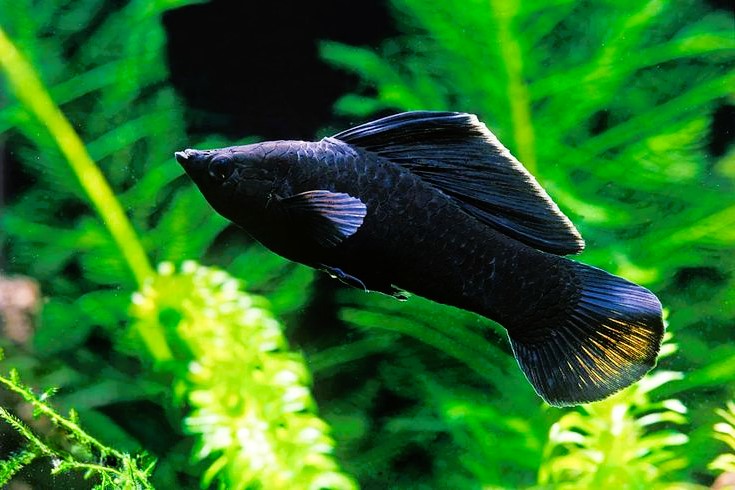
A striking livebearer fish recognized by its large, flowing dorsal fin and deep black coloration. Hardy and adaptable, making it a popular choice among aquarists.
Out of Stock
A striking livebearer fish recognized by its large, flowing dorsal fin and deep black coloration. Hardy and adaptable, making it a popular choice among aquarists.
Solid jet-black body with a tall, fan-shaped dorsal fin resembling a sail. Males have more pronounced sailfins, while females are larger-bodied but with smaller dorsal fins. Sleek and streamlined in shape.
3-5 years
Omnivorous; consumes algae, high-quality flakes, spirulina-based foods, and live or frozen foods like brine shrimp and daphnia.
Black Sailfin Mollies are a fantastic choice for aquarists who want a hardy, striking livebearer. Their dramatic fins and solid-black body make them stand out in community setups. With proper care and water conditions, they live long, healthy lives and bring elegance to any tank.
Beginner
30 gallons (due to larger size and active swimming needs)
7.0 to 8.5
10–30 dGH
72–82°F (22–28°C)
4 to 5 inches
Guppies, Platies, Swordtails, Corydoras, peaceful barbs, tetras, danios, snails, and shrimp (with caution).
Aggressive cichlids, large predatory fish, fin-nipping species like tiger barbs.
Poecilia latipinna
Poeciliidae
Central and South America – particularly Mexico to Colombia
Peaceful schooling fish; prefers groups of 4 or more. Works well in community tanks with other peaceful species.
Feed 2–3 times daily with a mix of high-quality flakes, spirulina, algae wafers, and live/frozen treats. Vegetables such as blanched spinach or zucchini are also beneficial.
Livebearer; females give birth to free-swimming fry, no parental care.
Like other mollies, they are livebearers. Females can give birth to 30–80 fry every 4–6 weeks. Fry should be separated or provided with hiding spots using dense plants to prevent predation. They grow quickly and can be fed powdered flakes, infusoria, or baby brine shrimp.
pH: 7.0–8.5, Temperature: 72–82°F, Hardness: 10–30 dGH, Ammonia/Nitrite: 0 ppm, Nitrate: <30 ppm
Ich, fin rot, fungal infections, and sensitivity to poor water quality. Slightly brackish water often helps prevent disease.
Peaceful community fish, though males may display territorial behavior during breeding.
Generally peaceful and social, ideal for community tanks. Males may show displays of aggression toward each other, especially when competing for females. Best kept with more females than males to reduce stress. They enjoy open swimming space and grazing on algae.
Black Sailfin Mollies are known for their large, sail-like dorsal fins and elegant solid-black coloration. These fish are hardy, active, and make excellent additions to community aquariums. They thrive in slightly brackish or freshwater environments with plenty of space for swimming. Males are particularly stunning, with extended dorsal fins that add a dramatic flair to the tank. Like other mollies, they are prolific livebearers and can produce fry frequently under proper conditions. Their algae-eating behavior also helps keep aquariums clean.