
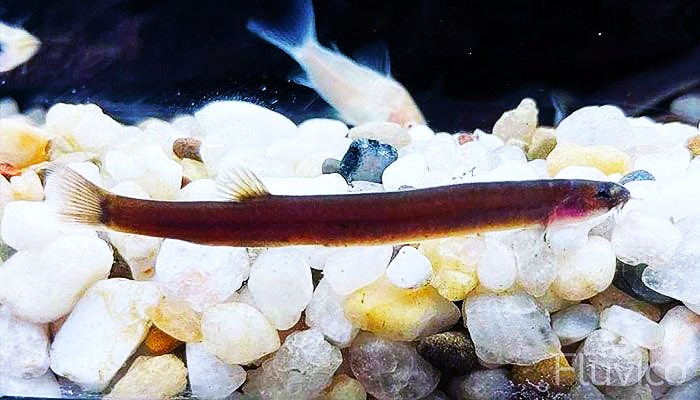
The Black Kuhli Loach (Pangio oblonga) is a slender, eel-like freshwater fish with a dark, almost black body. It is peaceful, nocturnal, and thrives in groups, making it an excellent addition to community aquariums. This loach is a bottom-dweller and enjoys burrowing in soft substrates.
Out of Stock
The Black Kuhli Loach (Pangio oblonga) is a slender, eel-like freshwater fish with a dark, almost black body. It is peaceful, nocturnal, and thrives in groups, making it an excellent addition to community aquariums. This loach is a bottom-dweller and enjoys burrowing in soft substrates.
Slender, elongated, eel-like body with a uniform dark brown to black coloration. Small eyes and barbels around the mouth for detecting food. Adults reach 3–4 inches. Smooth fins, flexible body adapted for burrowing.
5–10 years with proper care
Omnivorous; feeds on small live or frozen foods such as bloodworms, daphnia, and brine shrimp. Accepts high-quality sinking pellets and occasional blanched vegetables like cucumber or zucchini.
Black Kuhli Loaches are ideal for peaceful community aquariums. Their nocturnal, burrowing behavior, small size, and interesting social dynamics make them both decorative and functional. Keeping them in groups ensures social interaction and reduces stress.
Moderate – requires groups, soft substrate, hiding spaces, and stable water parameters.
30+ gallons (for a small group of 5–6)
6.0 to 7.0
2–12 dGH
75–86°F (24–30°C)
3–4 inches
Peaceful species such as small tetras, rasboras, guppies, and dwarf cichlids. Avoid aggressive or very large fish.
Aggressive or very large fish that may harass or eat them. Avoid overly active midwater or surface fish that may stress them.
Pangio oblonga
Cobitidae
Southeast Asia – Indonesia, Malaysia; inhabits slow-moving rivers, streams, and flooded forests with sandy or muddy substrates.
Highly social; best kept in groups of 5 or more. Peaceful with other community fish.
Feed 1–2 times daily. Offer live or frozen foods like bloodworms, daphnia, or brine shrimp. Supplement with sinking pellets and occasional blanched vegetables. Ensure food reaches the bottom for natural foraging.
Breeding in captivity is rare and challenging. They scatter eggs over fine-leaved plants or substrate without parental care. Conditioning with high-protein foods may improve spawning likelihood.
pH: 6.0–7.0, Temperature: 75–86°F (24–30°C), Hardness: 2–12 dGH, Ammonia/Nitrite: 0 ppm, Nitrate: <20 ppm
Sensitive to poor water quality; prone to ich and bacterial infections if stressed. Provide stable water parameters and soft substrate to prevent injuries.
Peaceful, shy, and nocturnal. Best kept in groups of 5 or more to encourage natural social behavior. Spends most of the day hiding under substrate, plants, or driftwood, becoming active at night while foraging.
Native to Southeast Asia, particularly Indonesia and Malaysia, the Black Kuhli Loach is admired for its dark, almost uniform black body and peaceful demeanor. Adults reach 3–4 inches, making them suitable for community aquariums. They prefer soft, sandy substrate for burrowing, plenty of hiding spots, and subdued lighting. A varied diet of live/frozen foods, sinking pellets, and vegetables promotes health, vibrant coloration, and natural behavior. Excellent detritus cleaners, they add activity and interest to the bottom of the tank.