
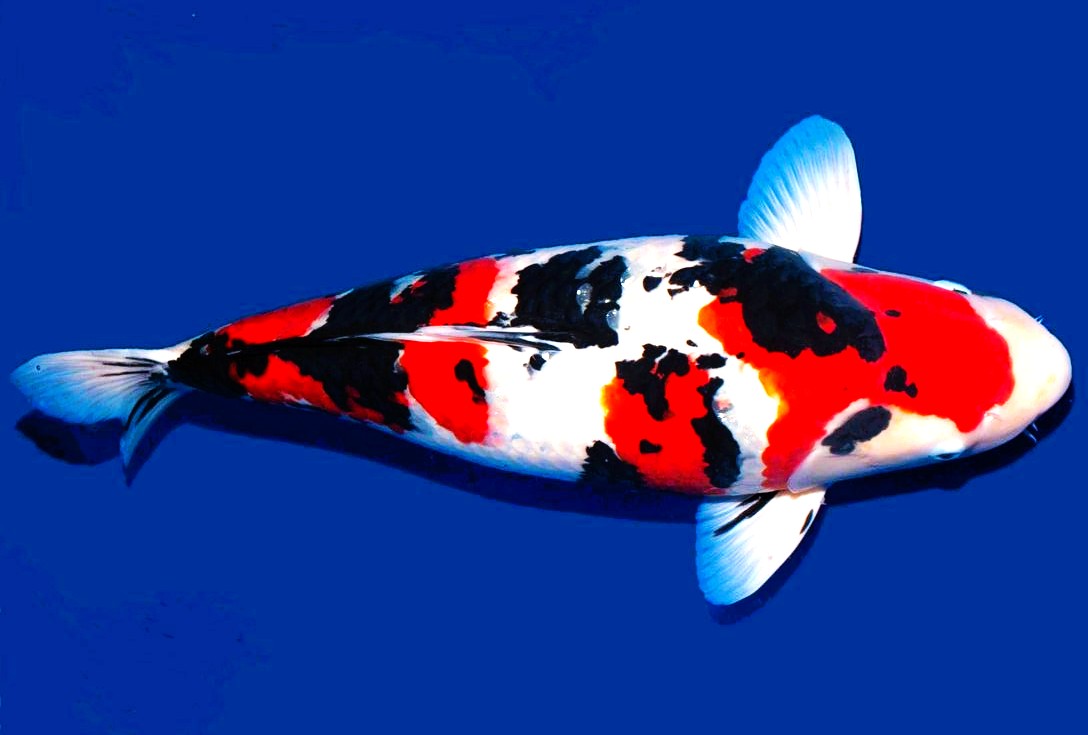
The Showa Koi, or Showa Sanshoku, is a striking koi variety characterized by its bold tri-color pattern of black (sumi), red (hi), and white (shiroji). Unlike the Sanke, the Showa has black markings that extend across the body, including the head, creating a dramatic and powerful appearance.
Out of Stock
The Showa Koi, or Showa Sanshoku, is a striking koi variety characterized by its bold tri-color pattern of black (sumi), red (hi), and white (shiroji). Unlike the Sanke, the Showa has black markings that extend across the body, including the head, creating a dramatic and powerful appearance.
A balanced tri-color pattern of black, red, and white. The black sumi often forms bold bands wrapping around the body, extending onto the head. Hi markings are deep red, while shiroji (white areas) provide sharp contrast. Various subtypes exist, such as Kindai Showa (modern Showa) with more white and cleaner patterns, and Hi Showa with stronger red coverage.
25–35 years; with excellent care, they may live 40+ years
Omnivorous; thrives on high-quality koi pellets, seasonal wheat germ food, vegetables (peas, spinach, lettuce), fruits (orange slices, watermelon), and protein-rich foods like shrimp, worms, and bloodworms. Feeding should be adjusted according to water temperature.
Showa Koi stand out with their bold and dynamic patterns. As one of the three Gosanke koi, they are highly valued for their strength, contrast, and presence in ponds. A well-balanced Showa with crisp, glossy colors is often considered the pinnacle of koi artistry.
Intermediate – requires large pond, strong filtration, and regular maintenance.
500+ gallons pond (1000+ gallons recommended for groups)
7.0 to 8.0
5–15 dGH
59–77°F (15–25°C); hardy in a wide range with proper pond care
24–36 inches (60–90 cm), depending on genetics and pond conditions
Compatible with other koi, goldfish, orfes, and non-aggressive pond fish. Avoid predatory or overly aggressive species.
Aggressive or predatory fish such as large cichlids, catfish, or fin-nippers. Avoid overcrowded ponds where competition can cause stress.
Cyprinus carpio (Showa Sanshoku variety)
Cyprinidae
Japan, Showa Era (1926–1989); bred from Kohaku and Ki Utsuri to create the three-color Showa pattern.
Schooling and social; thrive best in groups of koi. Active, friendly, and capable of recognizing and interacting with their owners.
Feed 1–2 times daily during warm months with koi pellets, leafy greens, and protein supplements. Reduce feeding in colder months, using wheat germ-based food for easier digestion. Avoid overfeeding to maintain good water quality.
Egg-scattering fish that breed in spring when water warms. Females release thousands of eggs onto aquatic plants or spawning brushes, which males fertilize externally. Adults may eat eggs and fry, so breeding is often done in separate, controlled environments. Selective breeding is crucial to preserve proper Showa markings.
pH: 7.0–8.0, Temperature: 59–77°F (15–25°C), Hardness: 5–15 dGH, Ammonia/Nitrite: 0 ppm, Nitrate: <40 ppm. Strong aeration and frequent water changes are essential.
Prone to koi herpesvirus (KHV), parasitic infections (flukes, anchor worms), and bacterial infections when water quality is poor. Quarantine new fish and maintain excellent pond hygiene to prevent disease outbreaks.
Peaceful, intelligent, and very social. Showa koi are lively and enjoy swimming with other koi in groups. They are curious, responsive to their keepers, and can even learn to feed from hands.
The Showa Koi, or Showa Sanshoku, was developed in Japan in the early 20th century during the Showa Era (1926–1989). It is one of the Gosanke trio, along with Kohaku and Sanke. Showa are known for their dramatic black sumi base pattern, overlaid with vibrant red (hi) and pure white markings. Unlike Sanke, Showa koi always have black markings on the head, giving them a more bold and powerful look. Over time, breeders refined Showa to produce clearer whites and deeper reds, resulting in modern Showa with striking contrasts. Showa are admired worldwide for their powerful and dramatic presence in ponds and competitions.