
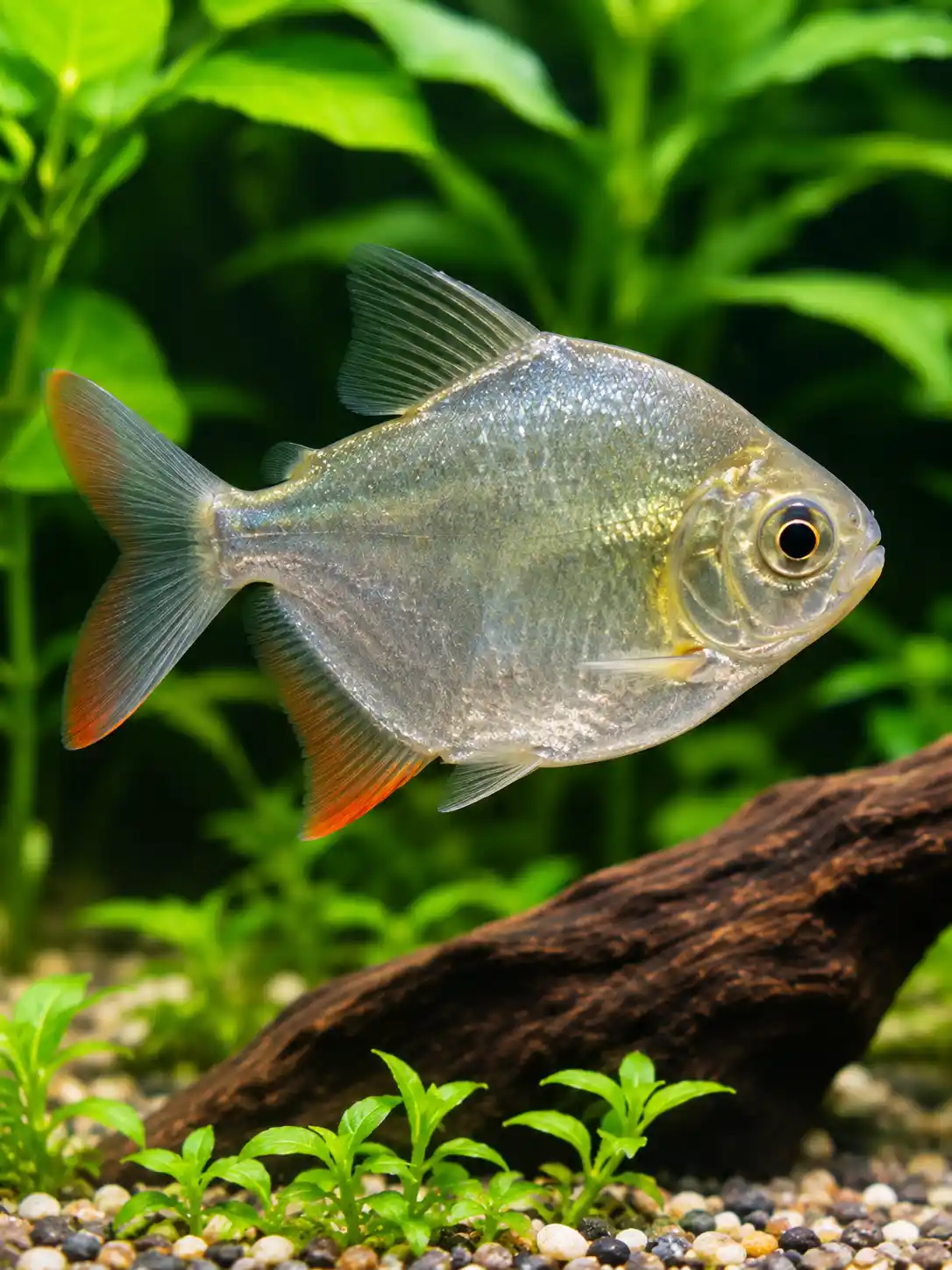
Dollar Fish, commonly known as Silver Dollar Fish, is a peaceful freshwater schooling fish recognized for its round, silvery body and active swimming behavior.
In Stock: Yes
Quantity in Stock: Few left
Dollar Fish, commonly known as Silver Dollar Fish, is a peaceful freshwater schooling fish recognized for its round, silvery body and active swimming behavior.
Rounded, laterally compressed body with a bright silver coloration, translucent fins, and a distinctive reflective appearance.
5–10 years
Herbivore/Omnivore
Dollar Fish are attractive, peaceful schooling fish for spacious community aquariums and are especially suitable for hobbyists who can provide adequate swimming space and a group.
Intermediate
75 gallons
6.0–7.5
5–15 dGH
24–28°C
5–6 inches
Peaceful medium to large community fish such as larger tetras, peaceful catfish, plecos, and compatible South American species.
Very small fish that may be swallowed, aggressive fish, fin-nipping species, and slow-moving species that cannot compete for food.
Metynnis argenteus
Serrasalmidae
South America
Strongly schooling; keep in groups of 5 or more.
Provide a primarily plant-based diet including algae-based foods, spirulina, vegetables, and quality herbivore pellets. Occasional protein-rich foods can be offered as supplements.
Egg scatterer; adults provide no parental care.
Dollar Fish are egg scatterers. Spawning occurs among plants or other surfaces, after which the eggs receive no parental care.
Maintain clean, stable and well-oxygenated water with consistent temperature and low ammonia and nitrite levels.
Ich, bacterial infections, parasitic infections, and stress-related problems caused by poor water quality or inadequate space.
Peaceful
Peaceful, active, and strongly schooling. They spend much of their time swimming in open areas of the aquarium.
Dollar Fish are active schooling fish that require plenty of swimming space and are best maintained in groups. They are generally peaceful but can become stressed when kept alone or in undersized aquariums. Their strong preference for plant matter makes them unsuitable for heavily planted aquariums if live plants are not protected.