
One of the most colorful and popular African cichlids, native to Lake Malawi. Known for brilliant coloration, relatively peaceful temperament, and active swimming behavior.
Out of Stock
One of the most colorful and popular African cichlids, native to Lake Malawi. Known for brilliant coloration, relatively peaceful temperament, and active swimming behavior.
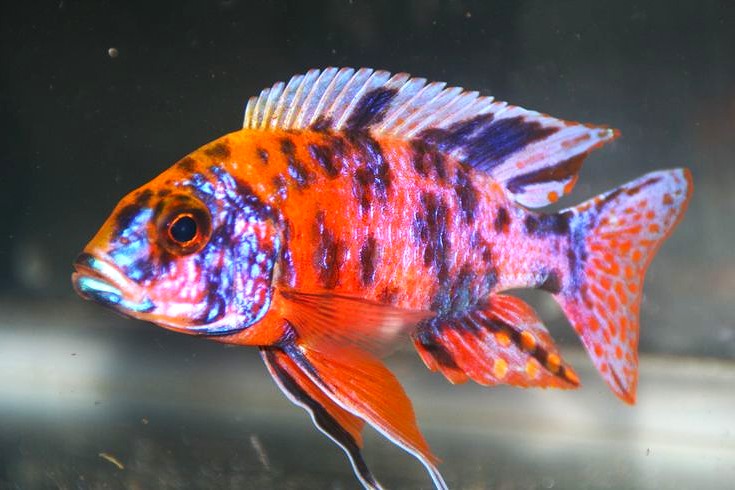
Medium-sized cichlids featuring elongated, slender bodies with brilliant coloration that can include bright blues, yellows, oranges, reds, and golds. Males usually exhibit more vivid colors and elongated fin rays.
6–10 years
Omnivorous; diet should be high in vegetable matter and algae-based foods like spirulina flakes, supplemented with high-quality pellets and occasional live or frozen protein foods.
Peacock cichlids are ideal for aquarists seeking vibrant African cichlids with engaging behaviors but without extreme aggression. Their wide range of colors enhances any suitably sized aquarium.
Intermediate; demands stable water parameters and appropriate tank size with well-planned tankmates.
55 gallons
7.8 to 8.6
10–20 dGH
74–82°F (23–28°C)
5–7 inches (13–18 cm)
Other Peacock cichlids, peaceful Lake Malawi species, larger tetras, catfish such as Plecos and Synodontis.
Peaceful and slow fish that may be outcompeted for food, very aggressive fish, or Mbuna cichlids due to aggression differences.
Aulonocara species
Cichlidae
Lake Malawi, East Africa
Less aggressive than Mbuna cichlids; males hold territories during breeding. Generally peaceful with compatible tankmates.
Feed 1-2 times daily with balanced diets emphasizing algae and vegetable content, supplemented by protein-rich live or frozen foods.
Maternal mouthbrooders; females incubate fertilized eggs and fry in their mouths for several weeks, providing protection.
Females hold eggs and fry in their mouths for 2-3 weeks. Fry are released fully formed and capable of independent feeding. Providing plenty of hiding spots reduces stress.
pH: 7.8–8.6, Temperature: 74–82°F (23–28°C), Hardness: 10–20 dGH, Nitrate: <20 ppm
Susceptible to Malawi bloat and ich; maintain water quality and proper diet to prevent issues.
Generally peaceful compared to Mbuna cichlids, but males can be territorial especially when breeding. Suitable for community tanks with other peaceful to semi-aggressive fish.
Active, curious, and relatively peaceful. Males establish territories but are less aggressive than Mbunas. Social behaviors include courtship displays and moderate territorial disputes.
Peacock cichlids (genus Aulonocara) are native to the rocky and sandy habitats of Lake Malawi. They tend to inhabit open waters over sandy bottoms or rock outcrops, where they use sensory pits on their heads to detect prey in the substrate. Known for their vibrant blue, yellow, red, and gold colors, peacocks are more peaceful and less aggressive than Mbuna cichlids, making them easier to keep in community tanks. They require stable water chemistry similar to their native habitat – alkaline, hard water with a pH between 7.8 and 8.6. Tank setups should include sandy substrates and rocks for territorial boundaries while providing open swimming space.