
A striking and colorful hybrid cichlid derived from the Jack Dempsey (Rocio octofasciata) through selective breeding and occasional crossbreeding with related species. Known for enhanced coloration and moderate aggression.
Out of Stock
A striking and colorful hybrid cichlid derived from the Jack Dempsey (Rocio octofasciata) through selective breeding and occasional crossbreeding with related species. Known for enhanced coloration and moderate aggression.
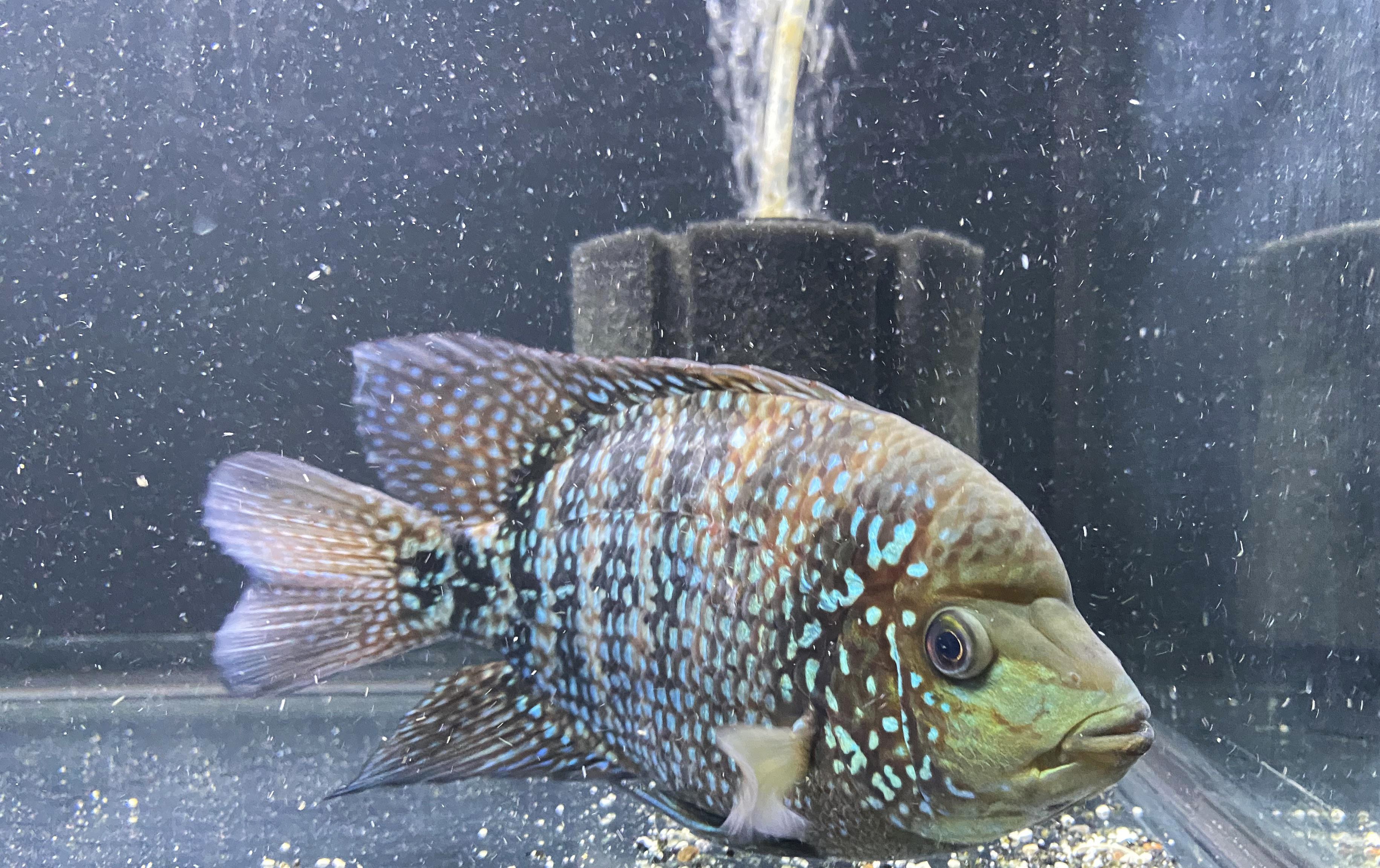
Robust cichlid body with variable coloration including blue, purple, and metallic hues layered over typical Jack Dempsey patterns. Fins tend to be elongated and colorful, with males usually more vibrant.
8–12 years
Omnivorous; high-quality pellets or flakes as staple, supplemented with live/frozen foods such as bloodworms, brine shrimp, and occasional blanched vegetables.
Jack Dempsey Hybrids offer enhanced color options and dynamic personalities, appealing to aquarists who want the classic Jack Dempsey's charisma with a twist. They require experienced care similar to purebred Jack Dempseys.
Intermediate; requires attentive care to maintain water quality, diet, and tankmate compatibility.
55 gallons for a single or pair
6.5 to 7.5
9–20 dGH
72–82°F (22–28°C)
8–10 inches (20–25 cm)
Other robust cichlids, large catfish, Plecos, and similarly sized semi-aggressive fish.
Small, timid fish or very aggressive species. Best kept with similarly sized, robust fish or species tolerant of moderate aggression.
Rocio octofasciata Hybrid
Cichlidae
Captive-bred hybrid derived mainly from Rocio octofasciata and selective breeding lines.
Territorial and assertive; moderate aggression requires ample territory and suitable tankmates.
Feed 1-2 times daily with a mix of quality cichlid pellets, flakes, live and frozen protein sources, and occasional vegetable matter.
Substrate spawner; pairs clean flat surfaces to lay eggs and guard fry aggressively. Breeding may be inconsistent due to hybrid genetics.
Pairs lay eggs on cleaned surfaces; fry are fiercely guarded. Hybrid breeding can be more challenging, with some fry exhibiting mixed traits.
pH: 6.5–7.5, Temperature: 72–82°F (22–28°C), Hardness: 9–20 dGH, Nitrate: <20 ppm
Prone to common cichlid diseases such as ich and fin rot if water quality suffers. Attention to diet and environment prevents most health issues.
Moderately aggressive and territorial; requires ample space and carefully chosen tankmates. Slightly more peaceful than wild-type Jack Dempseys but still assertive.
Moderate aggression typical of Jack Dempseys; territorial especially during breeding and establishing dominance hierarchy.
Jack Dempsey Hybrids result from selective breeding to intensify coloration or crossbreeding between Jack Dempseys and other cichlids. These hybrids often show vibrant blues, purples, or other color patterns uncommon in the wild type. They retain the robust body and general behavior of Jack Dempseys but may exhibit variable aggression and temperament based on lineage. Care requirements are similar to standard Jack Dempseys, including stable water parameters, spacious tanks (minimum 55 gallons for single or pair), and a diet rich in varied protein and vegetable matter. Tank setups with plenty of hiding places and territories help manage aggression. Breeders should note that hybrid offspring may have unpredictable traits and fertility.