
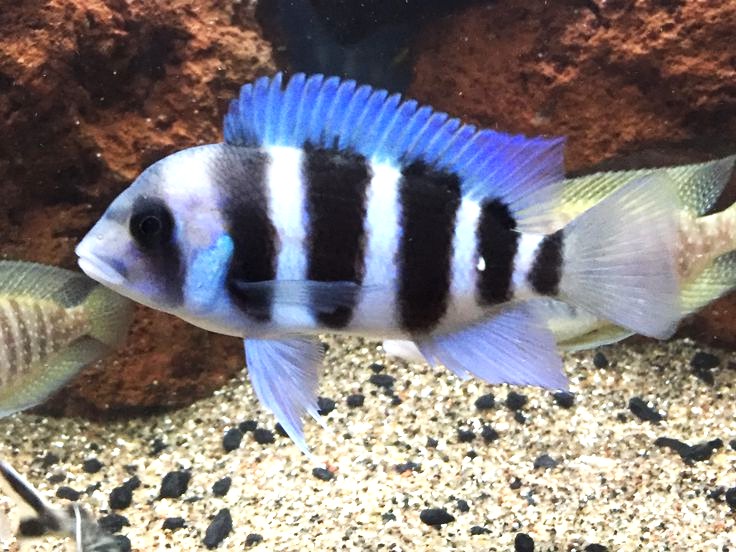
A majestic Rift Lake African cichlid known for its large size, distinct hump on the head, and striking blue and white band coloration. Native to Lake Tanganyika.
Out of Stock
A majestic Rift Lake African cichlid known for its large size, distinct hump on the head, and striking blue and white band coloration. Native to Lake Tanganyika.
Large, deeply-bodied cichlid with distinct thick black and white vertical bands and pale blue hues. Characteristic rounded forehead hump (nuchal hump) especially prominent in mature males. Long flowing fins and unique face structure.
15–25 years
Carnivorous; primarily feeds on smaller fish and aquatic invertebrates. In captivity, fed high-quality cichlid pellets, frozen or live foods such as krill, brine shrimp, mysis shrimp, and occasional algae.
Frontosas are impressive centerpiece fish for experienced aquarists able to provide large tanks and stable conditions. Their graceful movement and longevity make them highly rewarding but demand patience and dedication.
Intermediate to Advanced; requires large aquarium, stable water parameters, high-quality diet, and excellent filtration.
75 gallons for juveniles, 125+ gallons for adults or groups
8.0 to 9.0
12–20 dGH
72–79°F (22–26°C)
12–14 inches (30–36 cm)
Other large, peaceful or semi-aggressive African Rift Lake cichlids such as Altolamprologus, Julidochromis, some Cyprichromis
Small or very aggressive fish incompatible with their size and temperament, overly active fish that may cause stress. Best kept with large, peaceful or semi-aggressive Rift Lake cichlids.
Cyphotilapia frontosa
Cichlidae
Lake Tanganyika, East Africa
Social within groups; non-aggressive outside breeding season. Prefers to be kept in groups of 5 or more.
Feed 2–3 times daily with high-quality carnivorous pellets and frozen/live meaty foods. Provide fasting days to prevent digestive issues.
Maternal mouthbrooder; females carry and protect eggs and fry in their mouths for 5–7 weeks or more. Males maintain territory during breeding season.
Females incubate fertilized eggs and fry in their mouths for several weeks, around 5 to 7 weeks. Males guard territory while females mouthbrood. Fry released are fully formed and need appropriate feeding of tiny live foods.
pH: 8.0–9.0, Temperature: 72–79°F (22–26°C), Hardness: 12–20 dGH, Nitrate: <20 ppm
Susceptible to Malawi bloat, ich, and swim bladder disorders. Careful monitoring of water quality and diet is essential.
Generally peaceful for a large cichlid; slow-moving and tolerant of conspecifics but can be territorial during breeding. Prefers calm water with low current.
Generally peaceful and slow-moving; social within groups but may establish dominance hierarchies. Territorial mainly during breeding; calm demeanor otherwise.
Frontosa cichlids inhabit the deep rocky areas of Lake Tanganyika, thriving in stable, alkaline, and well-oxygenated water. They exhibit slow growth and require large tanks (minimum 75 gallons for juveniles, 125+ gallons for adults or groups) with plenty of caves and hiding places. The aquarium setup should replicate their natural habitat with sandy or aragonite substrates and dim lighting to reduce stress. Frontosas are ambush predators, feeding mostly at dusk. They appreciate calm water with good filtration, regular partial water changes, and stable water parameters. Juveniles require patience as they mature slowly, with breeding being a slow process due to lengthy mouthbrooding. They can live for many years with proper care.