
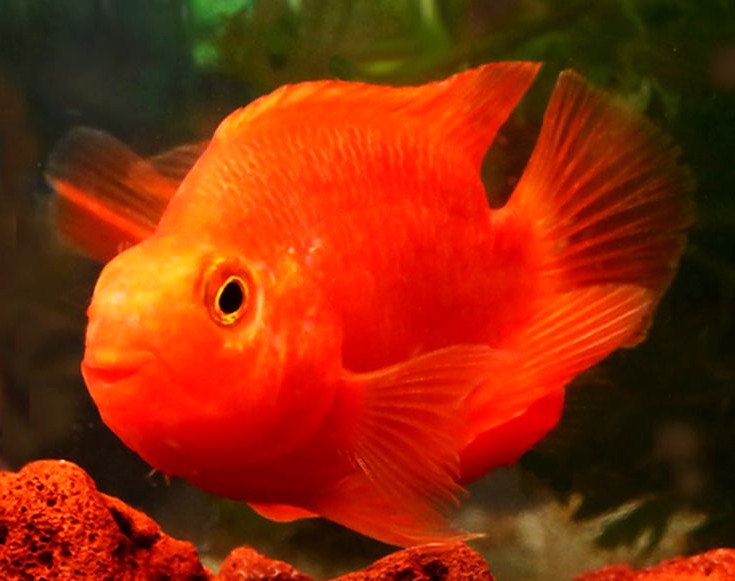
A hybrid cichlid species known for its vibrant red-orange coloration and unique body shape with a beak-like mouth. Popular in the aquarium trade for its striking appearance and peaceful temperament despite its hybrid origins.
Out of Stock
A hybrid cichlid species known for its vibrant red-orange coloration and unique body shape with a beak-like mouth. Popular in the aquarium trade for its striking appearance and peaceful temperament despite its hybrid origins.
Bright orange to red body with a rounder, beak-shaped mouth. Some fish display slight deformities typical to hybrid breeds. Fins are proportional with soft edges and may have subtle variations of color shading.
10–15 years
Omnivorous; high-quality pellets or flakes form the staple diet, supplemented with live or frozen foods such as bloodworms, brine shrimp, and occasional blanched vegetables.
Blood Parrot Cichlids offer a unique visual appeal and gentle temperament making them good choices for intermediate aquarists. Their hybrid nature means specialized care and attention to diet and environment is important.
Moderate; requires stable water conditions, proper diet, and spacious tank setup with adequate filtration.
30 gallons for a single fish; larger tanks recommended for groups
6.5 to 7.5
6–18 dGH
76–80°F (24–27°C)
8 inches (20 cm)
Peaceful cichlids, larger tetras, catfish such as Plecos and Corydoras.
Highly aggressive or very small, delicate fish are unsuitable. They do best with peaceful, medium-sized tankmates.
Hybrid Cichlid
Cichlidae
Captive-bred hybrid created from Midas and Redhead cichlids; no natural wild population.
Generally peaceful and social; can live singly or in groups with proper space.
Feed 2 times daily with a varied diet of high-quality pellets, flakes, frozen/live foods, and occasional vegetable matter. Feed smaller pieces suited for their narrow mouths.
Hybrid fish with limited fertility; known to lay eggs but often infertile. Breeding attempts require special care and conditions.
Eggs are often infertile and may not hatch. Some blood parrot females may lay eggs and show parental behavior but require special conditions and care.
pH: 6.5–7.5, Temperature: 76–80°F (24–27°C), Hardness: 6–18 dGH, Nitrate: <20 ppm
Susceptible to ich, fin rot, swim bladder disorders, often due to water quality and stress. Consistent maintenance and feeding practices reduce risks.
Generally peaceful and social; moderately active swimmers requiring ample space and hiding places.
Peaceful and moderately social; exhibit curiosity and moderate territorial displays but rarely aggressive. Suitable for community aquariums with compatible species.
Blood Parrot Cichlids are artificially bred hybrids from Central American cichlids, mostly involving Midas and Redhead Cichlids. They have no natural wild habitat and are maintained exclusively in aquariums. They prefer warm, slightly acidic to neutral water conditions similar to their parent species. Blood Parrots benefit from a well-filtered, spacious tank with multiple hiding places created from rocks, driftwood, and plants. They show moderate activity levels and can coexist peacefully with many community species. Their unique mouth shape may cause feeding challenges, requiring appropriately sized food to ensure proper nutrition.