
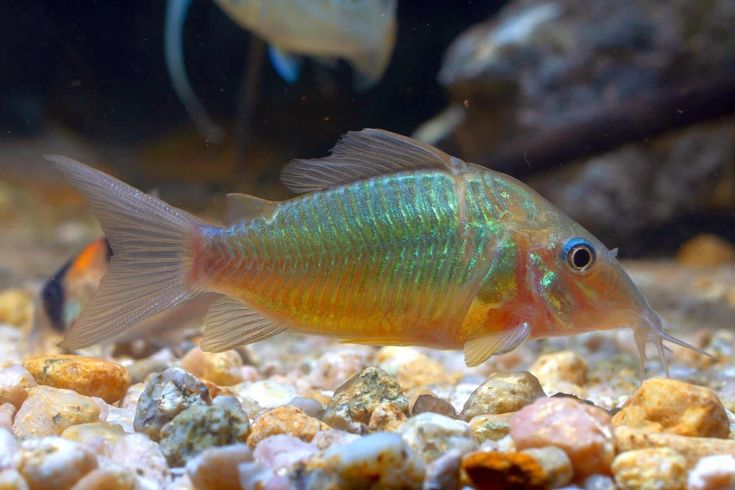
A large, shimmering green armored catfish with a metallic sheen. Peaceful and hardy, Emerald Corys are excellent bottom dwellers for community aquariums.
Out of Stock
A large, shimmering green armored catfish with a metallic sheen. Peaceful and hardy, Emerald Corys are excellent bottom dwellers for community aquariums.
Large, stocky body with shimmering emerald-green to bluish-metallic sheen across the flanks. Belly tends to be lighter, sometimes golden. Fins are mostly transparent with slight green reflections. Females are larger and rounder than males.
10–13 years
Omnivorous; enjoys sinking pellets, wafers, frozen and live foods such as bloodworms, brine shrimp, and occasional blanched vegetables.
Emerald Corys are a beautiful, hardy choice for community tanks. Their striking coloration, larger size, and peaceful nature make them stand out among Corydoras-like catfish. With proper care, they can live over a decade, making them a rewarding long-term aquarium resident.
Beginner to Intermediate
30 gallons (for a group of 5–6)
6.0 to 7.5
2–20 dGH
72–82°F (22–28°C)
3–3.5 inches
Tetras, Rasboras, Livebearers, Peaceful Gouramis, Angelfish, Discus (due to higher temperature tolerance), Otocinclus, Plecos, Shrimp (with caution), and Snails.
Aggressive or large predatory fish, fin-nippers like Tiger Barbs, or fish that outcompete them for food.
Brochis splendens (often grouped with Corydoras)
Callichthyidae
Amazon Basin in Peru, Ecuador, Colombia, and Brazil; slow-moving tributaries, floodplains, and forest streams with sandy or muddy bottoms.
Shoaling species; happiest in groups of 5–8+. Peaceful and active in community tanks.
Feed 1–2 times per day with sinking pellets/wafers. Supplement with frozen/live bloodworms, brine shrimp, tubifex, and daphnia. Ensure food reaches the substrate where they feed naturally.
pH: 6.0–7.5, Temperature: 72–82°F (22–28°C), Hardness: 2–20 dGH, Ammonia/Nitrite: 0 ppm, Nitrate: <20 ppm
Barbel erosion if kept on rough gravel; ich; bacterial infections from poor water quality. Prevent with fine sand, stable clean water, and regular maintenance.
Peaceful, shoaling fish that thrives in groups of 5 or more. Constantly forages along the substrate using sensitive barbels. Despite its size, it is shy and docile, making it a good community fish.
The Emerald Cory (Brochis splendens, often confused with Corydoras due to its similar appearance) is a larger species of armored catfish native to the Amazon Basin. It is admired for its iridescent, emerald-green metallic coloration that shimmers under aquarium lighting. Unlike smaller Corydoras, Emerald Corys can reach up to 3.5 inches, making them more substantial but still very peaceful. They thrive in sandy substrates that protect their delicate barbels and prefer aquariums with open swimming areas alongside shaded hiding spots. Their ability to breathe atmospheric air allows them to survive in low-oxygen conditions, although they thrive in clean, well-oxygenated water. They are social, active in groups, and a joy to watch as they sift through sand and interact with tank mates. A long-lived, robust species, they are ideal for aquarists looking for a peaceful yet larger bottom-dweller.