
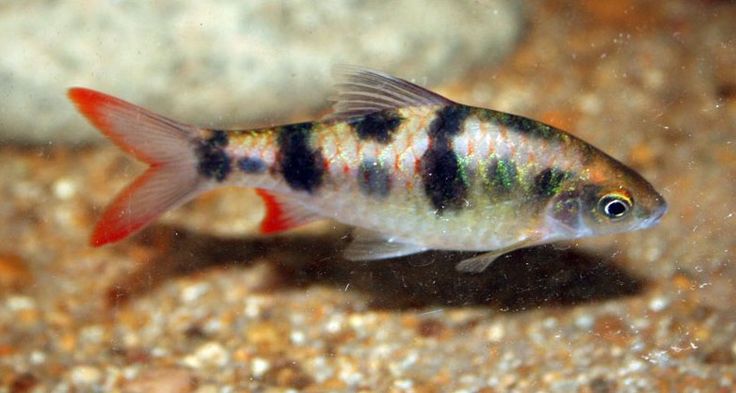
The Arulius Barb (Puntius arulius) is an active and robust freshwater fish, recognized for its metallic bronze-gold body and distinctive black vertical stripes along the sides. Known for its lively behavior and striking appearance, it is a popular choice for community aquariums.
Out of Stock
The Arulius Barb (Puntius arulius) is an active and robust freshwater fish, recognized for its metallic bronze-gold body and distinctive black vertical stripes along the sides. Known for its lively behavior and striking appearance, it is a popular choice for community aquariums.
Medium-sized, laterally compressed body with a bronze-gold base and 5–6 distinct black vertical stripes along the sides. Fins may show red or orange tints in males during breeding. Adults reach up to 3 inches (7.5 cm).
4–6 years with proper care
Omnivorous — feeds on high-quality flakes, pellets, and occasional live or frozen foods such as bloodworms, brine shrimp, and daphnia.
Arulius Barbs are colorful, lively, and semi-aggressive schooling fish. Proper group size, diet, and water maintenance ensure they thrive and display vibrant coloration.
Moderate — hardy but requires proper schooling and tank conditions.
30 gallons (for a school of 6+)
6.0 to 7.0
5–15 dGH
74–78°F (23–26°C)
3 inches (7.5 cm)
Compatible with other semi-aggressive or peaceful, similarly sized fish such as danios, other barbs, and small rainbowfish.
Avoid very small, delicate, or slow-moving fish that may be stressed or nipped.
Puntius arulius
Cyprinidae
South India, Sri Lanka
Schooling fish. Best kept in groups of 6 or more to reduce stress and encourage natural behavior.
Feed 2–3 times daily in small portions. Provide a varied diet including flakes, pellets, and occasional live/frozen foods to maintain health and coloration.
Egg scatterer. Spawns over fine-leaved plants or spawning mops. Adults should be removed after spawning to prevent egg predation.
Provide a separate breeding tank with soft, slightly acidic to neutral water (pH 6.0–7.0, temperature 74–78°F / 23–26°C). Scatter eggs among fine-leaved plants or spawning mops. Eggs hatch in 24–36 hours; fry become free-swimming in 3–4 days. Feed fry infusoria initially, then gradually transition to baby brine shrimp or finely crushed flakes.
pH: 6.0–7.0, Temperature: 74–78°F (23–26°C), Hardness: 5–15 dGH, Ammonia/Nitrite: 0 ppm, Nitrate: <20 ppm.
Prone to ich, fin rot, and stress if water quality is poor or kept in small groups.
Semi-aggressive but social; best kept in schools of 6 or more to reduce aggression and encourage natural schooling behavior.
Active, schooling, semi-aggressive. Prefers mid to upper swimming zones. Benefits from groups of 6 or more for reduced stress and natural behavior display.
Native to South India and Sri Lanka, Arulius Barbs are admired for their vibrant metallic coloration and active schooling nature. Males develop more intense colors during breeding, while females are slightly duller. They thrive in well-planted aquariums with open swimming areas and moderate water flow. Ideal for intermediate aquarists, Arulius Barbs are hardy, lively, and bring activity to community tanks.