
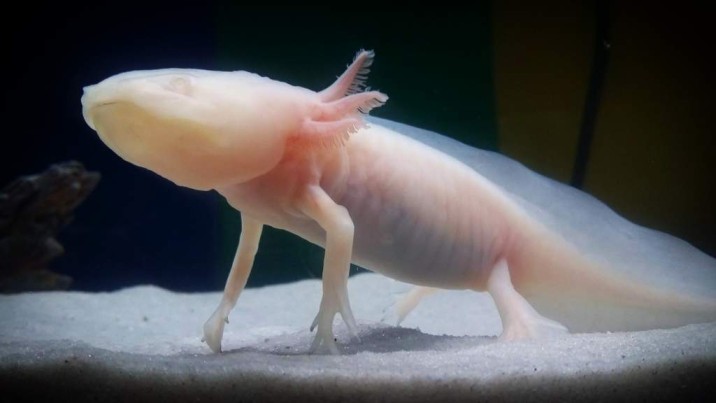
Albino Axolotls are striking aquatic salamanders with pale golden or white skin, pinkish gills, and red eyes.
Out of Stock
Albino Axolotls are striking aquatic salamanders with pale golden or white skin, pinkish gills, and red eyes.
White to golden body, pink external gills, red eyes, smooth skin.
10–15 years (up to 20 years in excellent care)
Carnivorous; earthworms, bloodworms, small feeder fish, pellets, and frozen foods.
Albino Axolotls make excellent display pets with their ethereal look. They require cold water, minimal stress, and stable tank conditions.
Intermediate
20–30 gallons per adult
6.5–8.0
7–14 dGH
60–68°F (16–20°C)
9–12 inches
Other axolotls of similar size; avoid fish and small invertebrates.
Aggressive fish, fin-nippers, or small fish/shrimp that may be eaten.
Ambystoma mexicanum
Ambystomatidae
Lake Xochimilco, Mexico (captive-bred worldwide)
Can be kept singly or in groups with caution to avoid biting.
Best diet includes live earthworms, frozen bloodworms, axolotl pellets, and occasional small fish.
Egg layer; males deposit spermatophores, which females collect to fertilize eggs; eggs are laid on plants or decorations.
Breeds in cool temperatures (16–18°C); eggs hatch in 2–3 weeks; larvae require live food.
pH: 6.5–8.0, Temperature: 60–68°F, Hardness: 7–14 dGH
Ammonia sensitivity, fungal infections, gill damage, stress from high temperatures.
Calm and docile; best kept alone or with similar-sized axolotls to avoid nipping.
Generally peaceful; can show nipping behavior if overcrowded or underfed.
Albino Axolotls are a captivating morph of the Ambystoma mexicanum. With their pinkish-white bodies and red eyes, they are popular among enthusiasts for their unique look. Axolotls retain juvenile features (neoteny), such as external gills, throughout their lives. They thrive in cool, well-filtered aquariums and require pristine water quality to stay healthy.