
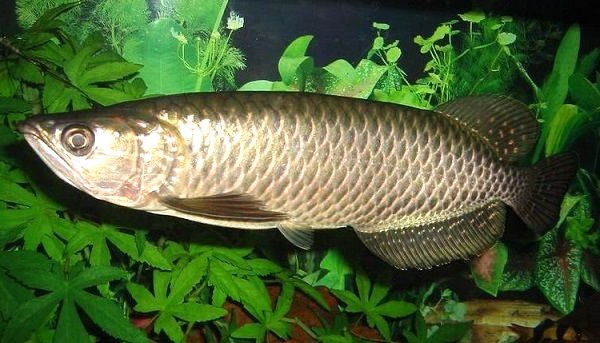
A freshwater Arowana species native to northern Australia, known for its metallic green scales and graceful swimming. Often called the Australian Pearl Arowana.
Out of Stock
A freshwater Arowana species native to northern Australia, known for its metallic green scales and graceful swimming. Often called the Australian Pearl Arowana.
Elongated body with metallic green scales, long pectoral fins, and dragon-like barbels. Adults develop golden or bronze highlights under strong lighting.
10–15 years
Carnivorous; feeds on insects, shrimp, worms, and small fish. Can accept high-quality pellets with adaptation.
The Jardini Arowana is a rare and exotic centerpiece fish, ideal for experienced aquarists looking for a unique and elegant species.
Advanced; requires a 200–250 gallon tank with strong filtration and stable water conditions.
200 gallons
6.5 to 7.5
3–10 dGH
75–82°F (24–28°C)
24 inches (60 cm)
Large catfish, bichirs, and robust freshwater species.
Small fish, fin-nipping species, and overly aggressive cichlids.
Scleropages jardinii
Osteoglossidae
Northern Australia, including Cape York Peninsula and surrounding regions.
Semi-solitary; can coexist with other large, non-aggressive fish in very spacious aquariums.
Feed daily with a variety of live, frozen, and pellet foods. High-protein diet enhances coloration and growth.
Mouthbrooder; males incubate eggs in their mouths until fry are ready to swim freely.
Females lay 30–60 eggs. Males mouthbrood for 5–7 weeks until fry are free-swimming. Fry feed on brine shrimp initially.
pH: 6.5–7.5, Temperature: 75–82°F (24–28°C), Hardness: 3–10 dGH
Gill curl, drop eye, parasitic infections, and bacterial diseases if water quality is poor.
Semi-aggressive; territorial but less aggressive than Asian Arowanas. Can be housed with large peaceful tank mates.
Active surface swimmer; semi-aggressive and territorial, especially toward other Arowanas.
The Jardini Arowana is a rare and exotic freshwater fish, native to northern Australia. Known for its metallic green sheen, it is slightly less aggressive than Asian Arowanas but still requires large tanks and careful management. Juveniles display dark green tones, while adults develop metallic highlights. Proper diet, lighting, and water quality are essential for maintaining health and vibrant coloration.