
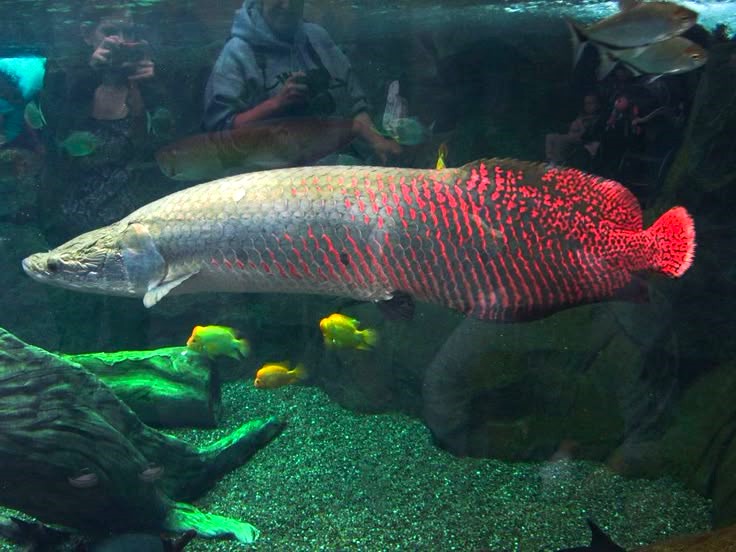
The Arapaima, one of the largest freshwater fish in the world, is known for its massive size, armored scales, and ability to breathe air.
Out of Stock
The Arapaima, one of the largest freshwater fish in the world, is known for its massive size, armored scales, and ability to breathe air.
Elongated body, olive-green to black coloration with reddish-orange accents near the tail, large armored scales, upward-facing mouth.
15–20 years (up to 27 years in captivity)
Carnivorous; feeds on fish, crustaceans, insects, small mammals, and birds that land on the water.
The Arapaima gigas is an impressive giant that requires an enormous water volume and advanced husbandry. Best suited for large public aquariums or massive private ponds.
Expert only
10,000+ gallons (ponds or massive custom aquariums required)
6.0–7.5
2–12 dGH
75–86°F (24–30°C)
8–10 feet (up to 15 feet in rare cases)
Only similarly large, robust fish in massive aquariums (e.g., giant catfish, pacu, arowana).
Any smaller fish, as they will be eaten; not suitable for community tanks.
Arapaima gigas
Arapaimidae
Amazon River Basin, South America
Solitary or kept in very small groups in massive enclosures.
Feeds on live fish, crustaceans, insects, and can adapt to large meaty prepared foods in captivity.
Egg layer; males guard the eggs and young in shallow nests during the breeding season.
Breeds in flooded forests during rainy season; males guard eggs and young, which rely on parental care for survival.
pH: 6.0–7.5, Temperature: 75–86°F, Hardness: 2–12 dGH
Prone to stress in confined spaces, parasitic infections, and water quality-related diseases.
Generally peaceful towards humans, but predatory; requires very large enclosures.
Powerful predator, surface-breathing fish; calm but highly territorial in small enclosures.
The Arapaima gigas is a prehistoric giant native to the Amazon River Basin. Reaching lengths of over 8–10 feet and weighing more than 200 kg, it is among the largest freshwater fish in the world. Arapaimas possess bony, armor-like scales and can breathe atmospheric air, allowing them to survive in oxygen-poor waters. Due to their immense size and specialized care requirements, they are kept mainly in public aquariums and by advanced hobbyists with massive ponds.