
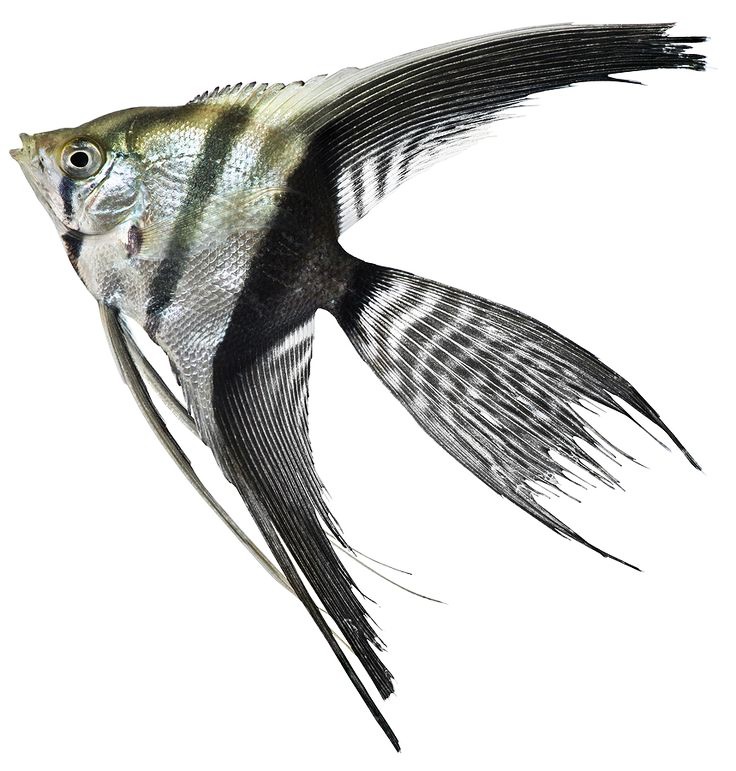
A stunning angelfish with half of its body covered in deep black coloration and the other half in silver-white, creating a dramatic contrast. Elegant and peaceful, it enhances community aquariums.
Out of Stock
A stunning angelfish with half of its body covered in deep black coloration and the other half in silver-white, creating a dramatic contrast. Elegant and peaceful, it enhances community aquariums.
Flat, triangular body with long flowing fins. One half of the body is jet black while the other half is silver-white, creating a striking and artistic contrast.
8–10 years
Omnivorous; high-quality flakes or pellets as staple, supplemented with live or frozen foods like brine shrimp, bloodworms, and blanched vegetables.
Half-Black Angelfish are a visually striking and elegant species that bring beauty and serenity to freshwater aquariums. Their unique coloration and peaceful nature make them ideal for both beginners and advanced hobbyists.
Intermediate; requires stable water conditions, clean environment, and careful monitoring during breeding and fry care.
20 gallons (preferably 30+ gallons for pairs or small groups)
6.5 to 7.5
3–10 dGH
76–82°F (24–28°C)
6 inches (15 cm)
Guppies, Platies, Corydoras, peaceful Tetras, Rasboras, and other calm community fish.
Fin-nipping species, aggressive fish, and very small or timid fish that may be stressed or harassed.
Pterophyllum scalare (Half-Black variety)
Cichlidae
Freshwater species from the Amazon basin, selectively bred for its unique half-and-half coloration.
Moderately social; prefers pairs or small groups. Avoid overcrowding and aggressive tankmates.
Feed twice daily with high-quality flakes or pellets, supplemented with live or frozen foods and fresh vegetables to enhance health and coloration.
Egg-layer; forms bonded pairs that lay eggs on flat surfaces, with both parents caring for and protecting the eggs.
Pairs lay 100–300 adhesive eggs on flat surfaces or broad leaves. Eggs hatch in 2–3 days depending on temperature. Parents fan and guard the eggs to ensure oxygenation and safety. Fry feed on infusoria and powdered foods before transitioning to larger live foods.
pH: 6.5–7.5, Temperature: 76–82°F (24–28°C), Hardness: 3–10 dGH, Nitrate: <20 ppm
Ich, fin rot, swim bladder problems, and stress-related diseases if water quality is not maintained. Regular cleaning and balanced feeding help prevent health issues.
Peaceful but can be territorial during breeding; best kept with calm, similarly sized tankmates.
Swim gracefully in mid to upper water zones. Males display fins to attract females. Generally peaceful but protective during breeding.
Half-Black Angelfish are admired for their striking half-and-half coloration, where one side of the body is deep black and the other is silver-white. This unique contrast makes them a visually captivating species in freshwater aquariums. They are peaceful and graceful swimmers, adapting well to freshwater tanks with stable conditions and proper care. During breeding, pairs form strong bonds and defend their eggs and territory. Providing flat surfaces or broad leaves encourages successful spawning. A varied diet rich in proteins and vegetables supports their health and coloration. Their eye-catching appearance and calm temperament make them a favorite among aquarium enthusiasts.