
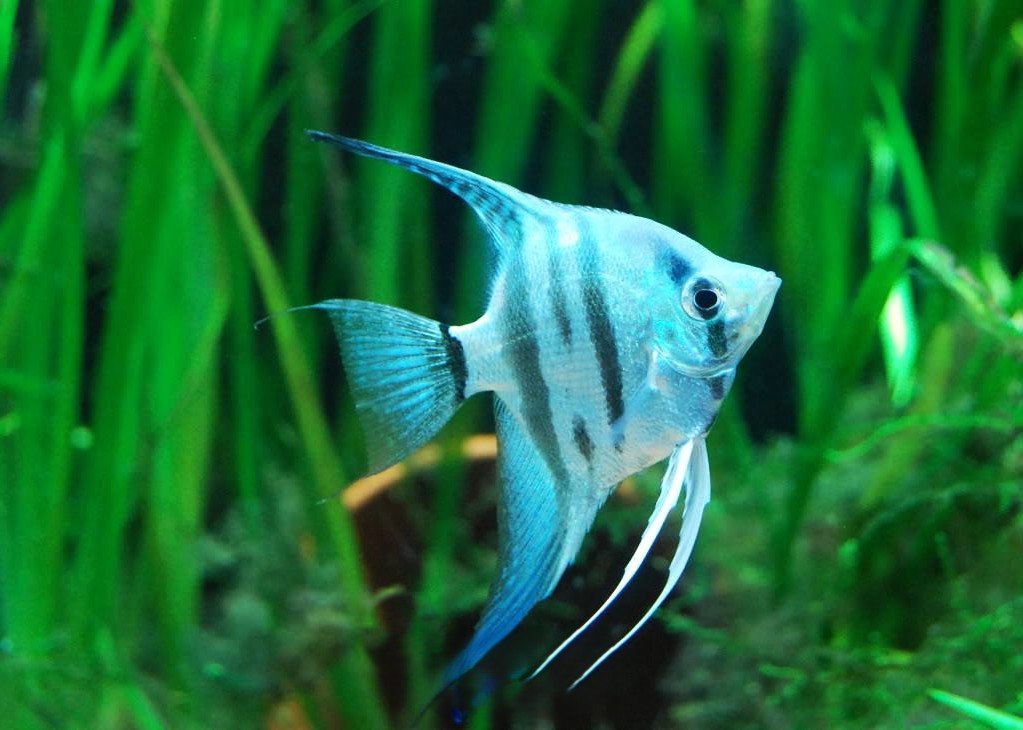
A mesmerizing angelfish with vibrant blue tones across its body and fins, creating an eye-catching and exotic presence in freshwater aquariums.
Out of Stock
A mesmerizing angelfish with vibrant blue tones across its body and fins, creating an eye-catching and exotic presence in freshwater aquariums.
Flat, triangular body with long, flowing fins. Covered in vibrant blue hues that intensify across the fins and body, giving a dazzling and exotic look.
8–10 years
Omnivorous; high-quality flakes or pellets as staple, supplemented with live or frozen foods such as brine shrimp, bloodworms, and blanched vegetables.
Blue Angelfish are a vibrant and elegant addition to any freshwater tank. Their striking coloration and calm nature make them a favorite for hobbyists seeking both beauty and tranquility.
Intermediate; requires stable water parameters, clean environment, and careful observation during breeding and fry care.
20 gallons (preferably 30+ gallons for pairs or small groups)
6.5 to 7.5
3–10 dGH
76–82°F (24–28°C)
6 inches (15 cm)
Guppies, Platies, Corydoras, peaceful Tetras, Rasboras, and other calm community fish.
Fin-nipping species, aggressive fish, and very small or timid fish that may be stressed or harassed.
Pterophyllum scalare (Blue variety)
Cichlidae
Freshwater species from the Amazon basin, selectively bred for its vibrant blue coloration.
Moderately social; prefers pairs or small groups. Avoid overcrowding and aggressive tankmates.
Feed twice daily with high-quality flakes or pellets, supplemented with live or frozen foods and fresh vegetables to support health and coloration.
Egg-layer; forms bonded pairs that lay eggs on flat surfaces and provide protective care for them until they hatch.
Pairs lay 100–300 adhesive eggs on flat surfaces or broad leaves. Eggs hatch in 2–3 days depending on water temperature. Both parents fan and guard the eggs to ensure proper oxygenation. Fry feed on infusoria and powdered foods before transitioning to larger live foods.
pH: 6.5–7.5, Temperature: 76–82°F (24–28°C), Hardness: 3–10 dGH, Nitrate: <20 ppm
Ich, fin rot, swim bladder issues, and stress-related diseases if water quality is neglected. Regular maintenance and balanced feeding help prevent health problems.
Peaceful but may show territorial behavior during breeding; best housed with calm, similarly sized tankmates.
Swim elegantly in mid to upper zones of the tank. Males display fins during courtship. Generally peaceful but protective during breeding.
Blue Angelfish are admired for their striking blue coloration that covers their body and fins, offering a vivid and exotic look to freshwater aquariums. Their graceful swimming behavior and calm temperament make them ideal for community tanks with stable water conditions. During breeding, pairs form strong bonds and actively guard their territory and eggs. Providing flat surfaces or broad leaves promotes successful spawning, while dense plants offer shelter for fry. A diet rich in proteins and vegetables supports their vibrant coloration and overall health. Their stunning appearance and serene behavior make them a popular choice among aquarists.