
The Red Claw Crayfish (Cherax quadricarinatus) is a large, hardy freshwater crayfish native to northern Australia and Papua New Guinea. Named after the bright red patches on the males’ claws, this species is prized for its striking looks, adaptability, and impressive size.
Out of Stock
The Red Claw Crayfish (Cherax quadricarinatus) is a large, hardy freshwater crayfish native to northern Australia and Papua New Guinea. Named after the bright red patches on the males’ claws, this species is prized for its striking looks, adaptability, and impressive size.
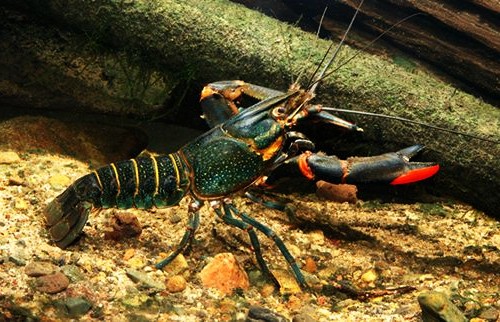
Large crayfish with a blue-green to olive body, often speckled, and males with distinctive bright red patches on the outer edges of their claws. Their size and red markings make them easily recognizable.
3–6 years in captivity, sometimes longer with excellent care
Omnivorous scavenger — consumes sinking pellets, algae wafers, aquatic plants, blanched vegetables (zucchini, peas, carrots), and high-protein foods like shrimp, worms, and small fish. Calcium-rich foods are essential for healthy shell development.
The Red Claw Crayfish is a hardy and fascinating aquarium or pond inhabitant, perfect for aquarists who want a bold and colorful crustacean. While not suited to small community tanks, they thrive in species-only or large, well-planned systems. Their size, color, and behavior make them standout specimens, especially in aquaponics setups where they contribute to tank cleaning.
Intermediate — hardy but requires large aquaria, proper filtration, and careful handling of territorial behaviors.
55+ gallons for a single adult; much larger for multiple crayfish or aquaponics use
6.5 to 8.0
6–15 dGH
68–82°F (20–28°C)
Up to 12 inches (30 cm), with males typically larger than females
Best in species-only setups or with large, fast, robust fish such as big barbs or cichlids. Avoid slow, small, or bottom-dwelling species.
Small fish, shrimp, snails, and other invertebrates. Slow or long-finned fish may also be attacked. Other crayfish in small tanks often fight to the death.
Cherax quadricarinatus
Parastacidae
Northern Australia and Papua New Guinea
Solitary and territorial. Aggressive towards other crayfish unless housed in very large ponds or tanks with ample hiding places. Will prey on smaller tankmates.
Feed daily with a mix of sinking pellets, blanched vegetables, and protein-rich items like shrimp or worms. Provide cuttlebone or calcium blocks to ensure proper shell hardening during molts.
Breeds readily in captivity in large, well-structured tanks. The female carries eggs beneath her tail until they hatch. Juveniles stay attached to the female for several days before becoming free-living.
Condition breeding pairs with high-protein diets. Females carry hundreds of eggs beneath their tail for 4–6 weeks depending on temperature. Hatchlings cling to the mother until they are free-living. Large, plant-dense tanks or ponds are ideal for successful breeding, as juveniles require hiding places to survive predation.
pH: 6.5–8.0, Temperature: 68–82°F (20–28°C), Hardness: 6–15 dGH, Ammonia/Nitrite: 0 ppm, Nitrate: <40 ppm. High oxygenation and good filtration are essential.
Molting problems, shell rot, parasitic infections, and aggression-related injuries. Sensitive to poor water quality and copper-based medications. Calcium supplementation is essential to prevent soft shells.
Semi-aggressive and territorial. Males in particular display dominance through their large red claws. They may attack or eat smaller tankmates and conspecifics in confined spaces.
Active, curious, and highly territorial. Red Claws dig burrows, move decorations, and often patrol their environment. They are nocturnal by nature but may be active during the day. During molting, they retreat into burrows or shelters until their new shell hardens.
Red Claw Crayfish (Cherax quadricarinatus) are among the most popular crayfish species due to their hardiness, adaptability, and impressive size. Males are easily recognized by their large claws with red patches, used for dominance displays and defense. They are hardy enough to thrive in a variety of water conditions but require large, secure tanks with strong filtration. Red Claws are opportunistic omnivores and will scavenge constantly, helping clean aquariums and ponds. However, they can damage plants, rearrange tank decor, and prey on smaller or weaker tankmates. They require plenty of hiding spaces, particularly during molting, when they shed their exoskeleton and are vulnerable to attack. They are excellent for species tanks or aquaponic systems but need ample space if kept in communities.