
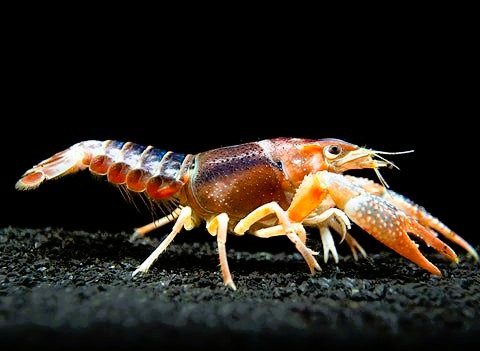
The Ghost Crayfish (Procambarus species), also sometimes called the White Ghost or Specter Crayfish, is a freshwater crayfish known for its pale white to translucent appearance. It is a hardy and fascinating invertebrate that adds a unique presence to aquariums.
Out of Stock
The Ghost Crayfish (Procambarus species), also sometimes called the White Ghost or Specter Crayfish, is a freshwater crayfish known for its pale white to translucent appearance. It is a hardy and fascinating invertebrate that adds a unique presence to aquariums.
Translucent to pure white exoskeleton, sometimes with a faint bluish hue. They have two large claws, long antennae, and segmented tails. Their 'ghostly' appearance gives them their name.
2–3 years in captivity with proper care
Omnivorous — thrives on sinking pellets, algae wafers, blanched vegetables (zucchini, spinach, peas), and protein-rich foods like bloodworms, shrimp, or fish pieces.
Ghost Crayfish are unique, hardy, and fascinating aquarium inhabitants thanks to their unusual coloration and bold personality. They require responsible care and are best suited for species-only aquariums or with carefully chosen tank mates.
Moderate — hardy and adaptable but requires careful tank mate selection and stable water parameters.
20 gallons per crayfish; larger tanks are recommended if keeping multiple with ample hiding spaces.
6.5–7.8
5–15 dGH
65–77°F (18–25°C)
4–6 inches (10–15 cm)
Fast, mid-to-top dwelling fish like danios, barbs, or rainbowfish. Avoid slow bottom dwellers or small species.
Other crayfish, slow or long-finned fish, small shrimp, or delicate tank mates that may be attacked or eaten.
Procambarus sp.
Cambaridae
Aquarium trade variety, believed to be derived from Procambarus species native to North America.
Best kept singly. If kept with others, provide many hiding spaces to reduce aggression. Cannibalism can occur if crowded.
Provide a balanced diet of algae wafers, sinking pellets, blanched vegetables, and occasional protein sources like shrimp or fish. Ensure calcium in the diet to support healthy molting.
Reproduces sexually. Males transfer sperm to females, who then carry eggs under their tail until they hatch. Clutch sizes range from 50–100 eggs, with fry fully independent once released.
Breeding is possible in captivity. After mating, females carry eggs for several weeks. Once hatched, the fry cling to the mother’s swimmerets before becoming free-swimming and independent.
pH: 6.5–7.8, Temperature: 65–77°F (18–25°C), Hardness: 5–15 dGH, Ammonia/Nitrite: 0 ppm, Nitrate: <30 ppm.
Molting problems due to lack of calcium, shell damage from fights, and susceptibility to poor water quality. Copper-based medications are toxic.
Semi-aggressive and territorial, particularly towards other crayfish or bottom dwellers. Best kept alone or with fast, mid- to top-dwelling fish.
Active diggers and rearrangers of substrate. Semi-aggressive, especially towards others of their kind. They often spend time in caves or under decorations but are bold scavengers.
Ghost Crayfish are an aquarium trade variant of crayfish, often appearing in shades from translucent to pure white. Their unusual coloration makes them highly desirable among aquarists. They grow to around 4–6 inches and require spacious aquariums with hiding spots such as caves, rocks, or driftwood. Ghost Crayfish are opportunistic omnivores that scavenge for food, helping to keep tanks clean, but they are also known to be aggressive toward tank mates, especially other crayfish. They molt regularly to grow, and providing a calcium-rich diet is essential for healthy shell development. Ghost Crayfish are excellent display pets but should be kept responsibly due to their potential invasiveness if released into the wild.