
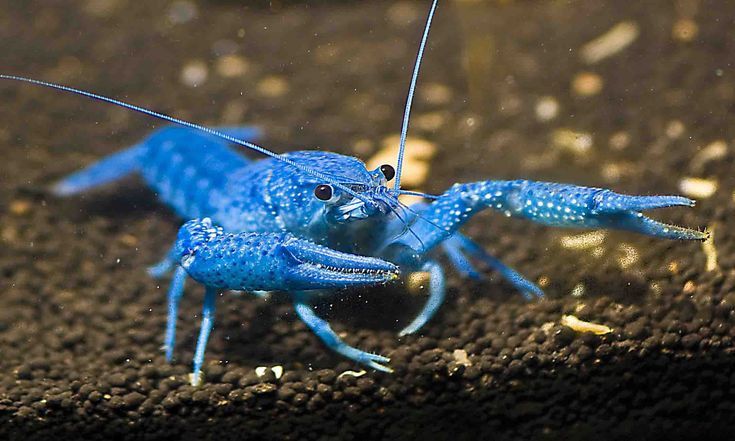
A striking electric-blue freshwater crayfish (Procambarus alleni) popular in the aquarium trade for its vivid coloration and dynamic behaviour. Native to Florida wetlands; most specimens in hobbyist tanks are captive-bred or selectively enhanced for bright blue tones.
Out of Stock
A striking electric-blue freshwater crayfish (Procambarus alleni) popular in the aquarium trade for its vivid coloration and dynamic behaviour. Native to Florida wetlands; most specimens in hobbyist tanks are captive-bred or selectively enhanced for bright blue tones.
Bright electric-blue to turquoise exoskeleton with large, powerful claws (chelae), segmented abdomen and fan-like tail. Intensity of blue varies with genetics, diet, and water conditions; some specimens show mottling or pale undersides.
2–5 years in captivity with proper care
Omnivorous scavenger — accepts sinking pellets, algae wafers, blanched vegetables (zucchini, peas, spinach), and occasional protein treats (bloodworms, shrimp, worms). Calcium-rich food helps support healthy molts.
Electric Blue Crayfish make captivating centerpiece animals for species or mixed tanks (with careful compatibility choices). Their color and behavior are great for hobbyists who can meet their space, filtration, and shelter needs. They are best kept by aquarists who understand molting, territorial dynamics, and the need for secure aquaria.
Intermediate — hardy but requires proper tank setup, stable water quality, and attention during molts.
30+ gallons for a single adult; 55+ gallons required for multiple crayfish or mixed community setups
6.5 to 8.0
6–15 dGH
65–80°F (18–27°C)
4–7 inches (10–18 cm) depending on sex and conditions
Fast, mid-to-top swimmers (danios, barbs, larger tetras), robust fish that occupy different niches; avoid small shrimp, small bottom-dwellers, and very slow fish.
Small shrimp (e.g., Neocaridina, Caridina), small bottom-dwellers (Corydoras, small loaches), slow or long-finned fish, small or sleeping fish — all may be attacked or eaten.
Procambarus alleni
Cambaridae
Southeastern United States — native to Florida freshwater habitats; most aquarium strains are captive-bred
Solitary and territorial with conspecific aggression common; not a schooling species. Tolerates other inhabitants only when ample space and hiding spots are provided.
Feed once daily (adult) with a varied diet: quality sinking pellets or crayfish foods, algae wafers, blanched vegetables, and occasional frozen/live protein. Remove uneaten food promptly to protect water quality. Offer cuttlebone or calcium supplements periodically to support exoskeleton health.
Sexual reproduction with females carrying fertilized eggs under the tail (pleopods) until the hatchlings are released. Breeding occurs readily in captivity when water and diet are optimal.
Condition sexes with varied, protein-rich diet. Mating results in eggs attached beneath the female's tail; incubation duration depends on temperature and water quality. Juveniles emerge as miniature versions of adults and disperse shortly after becoming free-swimming. Provide dense planting or fine substrate for young and separate fry from adults if protection is needed.
pH: 6.5–8.0, Temperature: 65–80°F (18–27°C), Hardness: 6–15 dGH, Ammonia/Nitrite: 0 ppm, Nitrate: <40 ppm. Good oxygenation and stable conditions are important.
Failed or problematic molts, shell rot (bacterial/fungal secondary infections), ammonia/nitrite sensitivity, parasitic infestations, and injuries from aggressive encounters. Avoid copper medications and maintain calcium availability.
Semi-aggressive and territorial; best kept singly or with careful tankmate selection.
Mostly nocturnal but often active by day. Territorial and semi-aggressive — will explore, burrow, and defend chosen shelters. Can be bold around humans, often approaching for food. Molting periods require hiding spots; after molt they may hide for several days while their new exoskeleton hardens.
Electric Blue Crayfish (Procambarus alleni) are active, curious invertebrates valued for their neon-blue exoskeleton and robust personalities. They require a well-filtered aquarium with plenty of hiding places (caves, PVC, rockwork) and secure lids, as they can climb and escape. Crayfish are opportunistic feeders and effective scavengers, but they produce significant waste so strong filtration and regular water changes are needed. Molting is a normal part of growth — during and just after a molt the crayfish are vulnerable and need safe shelters. Careful tankmate selection is essential: they will prey on small shrimp, slow or sleeping fish, and may fight conspecifics unless the tank is large and structured. Quarantine new specimens, avoid copper-based medications, and provide calcium and varied nutrition to reduce molting problems and shell rot.