
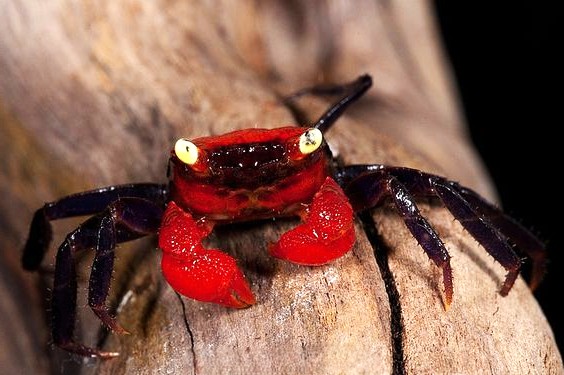
The Vampire Crab (Geosesarma sp.) is a stunning semi-terrestrial freshwater crab species popular in aquascaping and paludariums. Known for its bright purple body, orange to yellow eyes, and intricate markings, it thrives in land-water environments where both humidity and access to water are available.
Out of Stock
The Vampire Crab (Geosesarma sp.) is a stunning semi-terrestrial freshwater crab species popular in aquascaping and paludariums. Known for its bright purple body, orange to yellow eyes, and intricate markings, it thrives in land-water environments where both humidity and access to water are available.
Bright purple to dark violet body with striking orange to yellow eyes. Carapace measures about 1–1.5 inches (2.5–4 cm). Legs may show lighter hues or striping. Distinctive glowing eyes give them a unique 'vampire-like' look.
2–3 years in captivity with proper care
Omnivorous — feeds on small insects, biofilm, detritus, bloodworms, brine shrimp, algae wafers, vegetables (zucchini, spinach), and high-quality crab pellets.
Vampire Crabs add striking beauty and activity to paludariums. With their vibrant coloration and unique behaviors, they are both captivating and rewarding for aquarists who provide the right balance of land, water, and hiding spaces.
Moderate — requires paludarium setup with both land and shallow freshwater areas; not ideal for beginners.
10 gallons (for a small group with both land and shallow water areas); paludarium-style setup recommended
7.0 to 8.0
6–15 dGH
75–82°F (24–28°C)
1.5–2 inches (3.5–5 cm) carapace
Small peaceful fish that remain in water column (guppies, small rasboras, endlers), shrimp species (with caution, as crabs may hunt them), and snails. Best in species-only setups.
Large or aggressive fish, other crab species, predatory fish (cichlids, bettas, puffers), and animals that may outcompete or injure them.
Geosesarma sp.
Sesarmidae
Southeast Asia — Indonesia (Java, Sulawesi, surrounding islands)
Best kept in small groups (1 male with several females). Males are territorial and should not be crowded. Provide many hiding places to minimize aggression.
Offer a mix of protein-rich foods (bloodworms, brine shrimp, small insects) and plant matter (leaf litter, blanched vegetables, algae wafers). A varied diet ensures proper growth and color vibrancy.
Breeds readily in captivity under the right conditions. Females carry eggs under their abdomen until fully developed young hatch, bypassing the free-swimming larval stage. Provide hiding spaces and a stress-free environment to increase success.
Sexually dimorphic; males have larger claws, females broader abdomens. Females carry 20–80 eggs under their abdomen, and fully formed miniature crabs hatch after 4–6 weeks. Provide plenty of moss, caves, and biofilm for juveniles. Parental cannibalism may occur, so separating young improves survival.
pH: 7.0–8.0, Temperature: 75–82°F (24–28°C), Hardness: 6–15 dGH, Ammonia/Nitrite: 0 ppm, Nitrate: <20 ppm. Maintain high humidity on land area.
Molting stress, fungal or bacterial infections in poorly maintained environments, aggression-related injuries, and dietary deficiencies.
Semi-aggressive, especially males towards rivals; territorial but can coexist in small colonies with enough space and hiding areas.
Nocturnal, semi-aggressive, territorial among males but calmer in mixed groups. They spend much of their time exploring land surfaces, hiding under driftwood, or scavenging along the water edge.
Vampire Crabs (Geosesarma sp.) originate from freshwater streams and forests of Java, Sulawesi, and surrounding islands in Indonesia. They are highly sought after for their vibrant appearance — often purple to dark blue bodies with contrasting yellow-orange eyes. Unlike many crabs, they are true freshwater and semi-terrestrial, requiring both land and water areas in their habitat. They are most active at night and exhibit scavenging behavior, consuming a wide range of organic matter. Males can be territorial, so providing ample hiding spots is key to reducing aggression. A paludarium setup with moss, driftwood, caves, and shallow water is ideal. They molt as they grow, making secure shelters essential during this vulnerable period.