

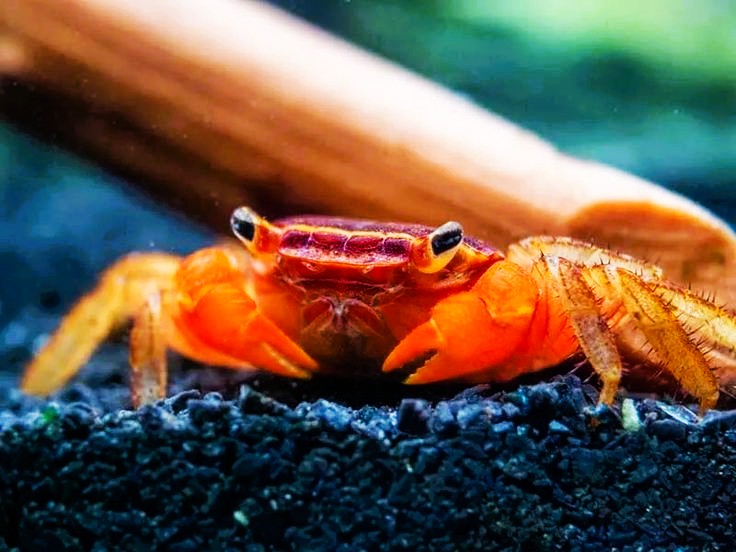
The Red Claw Crab (Perisesarma bidens) is a semi-aquatic crab species recognized by its striking red claws. Popular among aquarists for their bright appearance and fascinating behavior, they require brackish water and access to land areas within their habitat.
Out of Stock
The Red Claw Crab (Perisesarma bidens) is a semi-aquatic crab species recognized by its striking red claws. Popular among aquarists for their bright appearance and fascinating behavior, they require brackish water and access to land areas within their habitat.
Brown to olive-green body with bright red or orange claws. Carapace size up to 2 inches, with long legs and strong pincers. Males have larger, more vivid claws compared to females.
2–3 years in captivity with proper brackish conditions
Omnivorous scavenger; feeds on sinking pellets, algae wafers, blanched vegetables (zucchini, spinach), and occasional protein sources like bloodworms, brine shrimp, or fish.
Red Claw Crabs are fascinating additions for aquarists who can provide a semi-aquatic, brackish setup. Their unique coloration and scavenging habits make them rewarding, but their special requirements make them unsuitable for standard freshwater community tanks.
Intermediate — requires brackish water, land access, and careful tankmate selection.
10 gallons for one crab; larger if housing multiples
7.5–8.5
10–25 dGH
75–82°F (24–28°C)
Up to 4 inches (10 cm) leg span; carapace ~2 inches
Fast-swimming fish (mollies, guppies, bumblebee gobies) in brackish setups. Avoid slow, bottom-dwelling, or small species.
Slow fish, bottom dwellers, shrimp, and small species. They may pinch fins or prey on vulnerable tank mates. Avoid keeping multiple males in small tanks.
Perisesarma bidens
Sesarmidae
Southeast Asia, primarily mangrove swamps and estuaries
Semi-social; can be housed in groups with enough space and hiding spots. Males are territorial and aggressive when cramped.
Feed 4–5 times a week with a varied diet of sinking pellets, vegetables, algae wafers, and occasional protein foods. Remove uneaten food to prevent fouling.
Difficult to breed in captivity. In nature, larvae are released into brackish/marine water where they develop before returning to freshwater habitats.
Rarely achieved in aquariums due to their need for brackish-to-marine water for larvae development. Eggs carried by females hatch into planktonic larvae that require saline water conditions.
pH: 7.5–8.5, Temperature: 75–82°F (24–28°C), Salinity: 1.005–1.015 SG (brackish), Hardness: 10–25 dGH, Ammonia/Nitrite: 0 ppm, Nitrate: <30 ppm.
Molting problems due to lack of minerals, poor water quality stress, aggression injuries from fights, and susceptibility to copper-based medications.
Semi-aggressive and territorial. Males may fight, especially in small enclosures. Best kept singly or with adequate space and hiding places.
Active scavengers and explorers. Semi-aggressive, especially males. They frequently climb decorations or tank edges, so a tight lid is essential.
Red Claw Crabs are small, semi-aquatic crustaceans that thrive in brackish water setups with both land and aquatic areas. Their distinctive red claws and active scavenging behavior make them highly attractive to aquarists. They grow up to 4 inches (including leg span) and are excellent tank cleaners, consuming detritus, algae, and leftover food. However, they are opportunistic feeders and may attack slow or small tank mates. Providing a paludarium-style tank with brackish water (a mix of freshwater and marine salt), ample hiding spots, and sandy substrate ensures their health and longevity. They are known for their curious nature, burrowing habits, and ability to climb out of tanks without lids.