

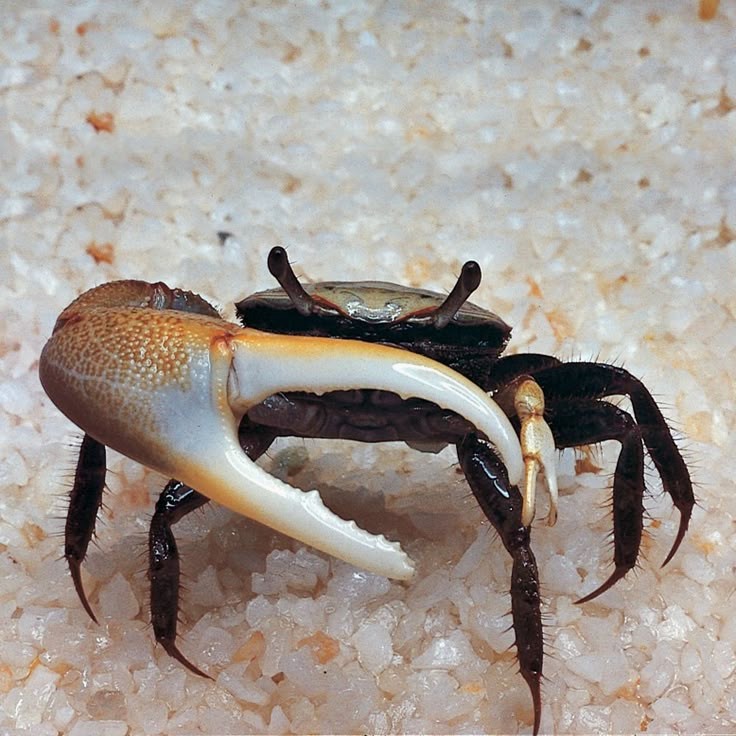
Fiddler Crabs (Uca spp.) are small, semi-aquatic crabs known for their highly distinctive asymmetrical claws, with males displaying one claw much larger than the other. They are active, social, and entertaining to watch, making them a popular choice for brackish aquariums or paludariums.
Out of Stock
Fiddler Crabs (Uca spp.) are small, semi-aquatic crabs known for their highly distinctive asymmetrical claws, with males displaying one claw much larger than the other. They are active, social, and entertaining to watch, making them a popular choice for brackish aquariums or paludariums.
Small body (1–2 inches carapace width) with a brown to tan coloration, sometimes with orange or yellow markings. Males have one oversized claw used for signaling and fighting, while females have two smaller, equal-sized claws.
2–3 years in captivity with proper care
Omnivorous scavengers — feed on sinking pellets, algae wafers, blanched vegetables, detritus, and occasional protein-rich foods like bloodworms, brine shrimp, and fish pieces.
Fiddler Crabs are fascinating, active crustaceans that bring personality to brackish aquariums. With proper semi-aquatic care and an understanding of their natural behavior, they can thrive and provide endless entertainment. However, they are not suitable for full freshwater aquariums.
Intermediate — requires brackish water, access to land, and group housing considerations.
10 gallons for a small group; provide land and water areas
7.5–8.5
10–25 dGH
75–82°F (24–28°C)
Up to 2 inches carapace size, 3–4 inches including legs
Brackish-tolerant, fast-swimming fish such as mollies or bumblebee gobies. Avoid bottom dwellers and delicate species.
Slow fish, shrimp, or other delicate invertebrates. Avoid small bottom dwellers that may be attacked or stressed. Not suitable for peaceful freshwater community tanks.
Uca spp.
Ocypodidae
Native to mangroves, estuaries, and coastal tidal zones across the Americas, Asia, and Africa
Social; best kept in groups of 3 or more. Males may display territorial aggression but are generally non-lethal if enough space is provided.
Provide a mixed diet of sinking pellets, algae wafers, blanched vegetables, and occasional protein. Offer calcium-rich foods to support healthy molting.
Difficult to breed in captivity. In the wild, females release eggs into saltwater, where larvae develop in marine conditions before returning to brackish/freshwater areas.
Breeding is nearly impossible in home aquariums due to their requirement for full marine water during larval stages. Successful breeding only occurs in nature or specialized aquaculture facilities.
pH: 7.5–8.5, Temperature: 75–82°F (24–28°C), Salinity: 1.005–1.015 SG (brackish), Hardness: 10–25 dGH, Ammonia/Nitrite: 0 ppm, Nitrate: <30 ppm.
Molting issues caused by mineral deficiencies, stress from poor water conditions, shortened lifespan if kept in freshwater, and injuries from aggressive male interactions.
Peaceful to semi-aggressive. Males may spar with each other, waving or grappling with their oversized claw. Best kept in groups with enough space and hiding areas.
Highly active, social, and diurnal. Males use their large claw for waving displays and territory defense. They enjoy digging and burrowing in sandy substrates and require land areas to climb and explore.
Fiddler Crabs are small crabs native to coastal regions, estuaries, and mangrove habitats. They thrive in brackish water with access to both land and water, making a paludarium-style setup essential. Males are easily identified by their oversized claw, which they wave to attract females and establish dominance. These crabs are natural scavengers, keeping tanks clean by consuming leftover food and algae. While hardy, they are often miskept in full freshwater setups, which shortens their lifespan. They require slightly saline water, sandy substrate for burrowing, and basking areas above the waterline. They are very active during the day, constantly foraging and interacting with one another, making them entertaining pets for brackish aquariums.